
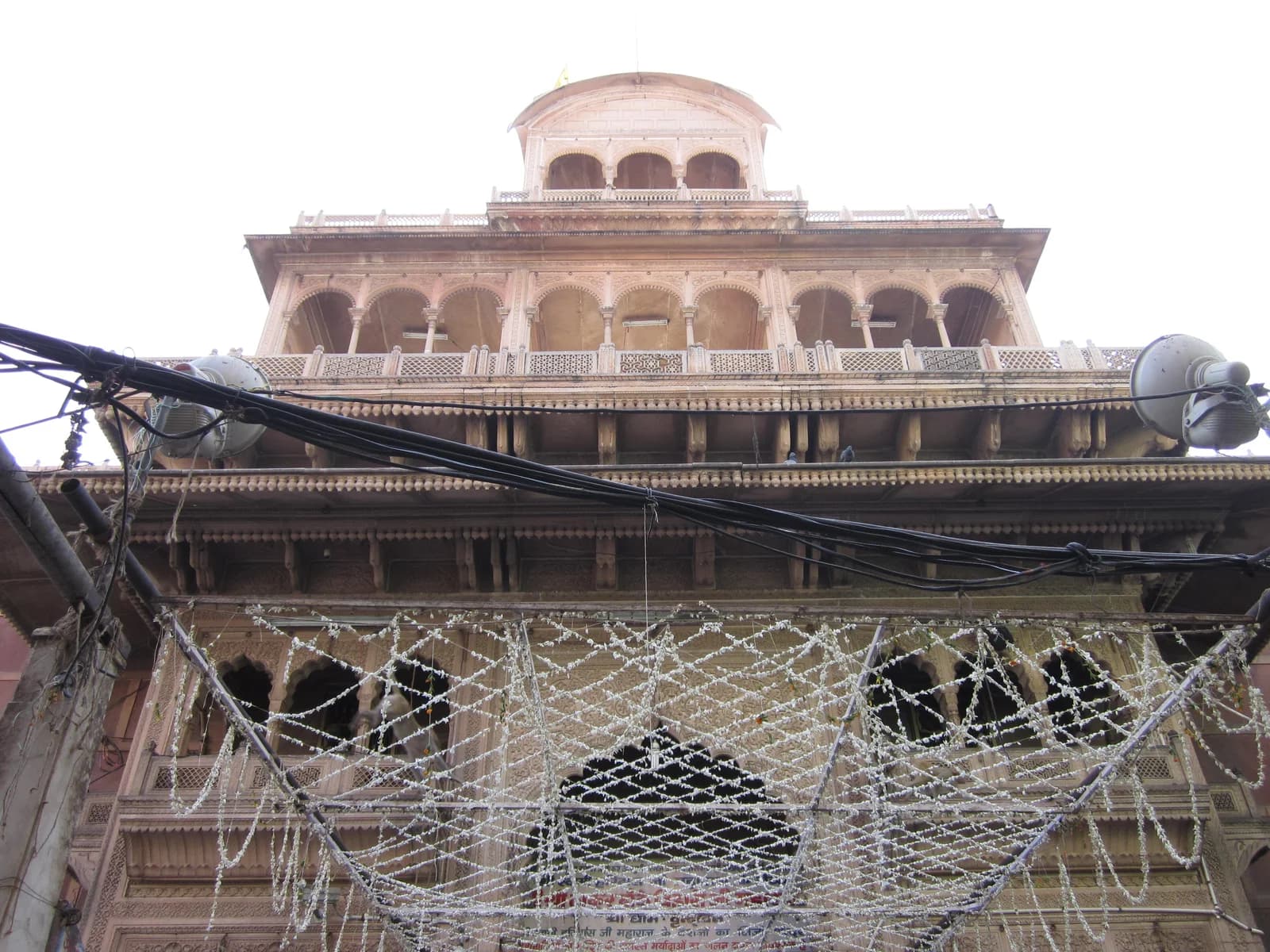
For Agra to Vrindavan, choose a train from Agra Cantt (AGC) to Mathura Junction (MTJ) if you are travelling light and want to avoid a longer road journey; from MTJ, take an auto-rickshaw or taxi towards Vrindavan and walk the final stretch to Shri Banke Bihari Temple. Choose a direct car or taxi from Agra if you have children, senior family members, luggage or several stops to make. The road trip is roughly 70–75 km, depending on your starting point and approach, while the train reaches Mathura, not the Banke Bihari temple lanes. If you have just visited the Taj Mahal, an afternoon departure can miss morning darshan; an unhurried temple day works better with an early start or an overnight stay.
Agra to Vrindavan: train or direct car at a glance
Train plus local transportAgra Cantt (AGC) to Mathura Junction (MTJ), approximately 54 km by rail; listed train journeys vary from about 35 minutes to 1 hour 40 minutes. Then travel roughly 12–15 km by road towards Vrindavan.Solo travellers, couples and visitors with flexible schedulesStation transfers, train waiting and a final walkDirect car or taxiApproximately 70–75 km by road; commonly around 1 hour 45 minutes to 2 hours 30 minutes before unusual congestion or diversions.Families, seniors, luggage and multi-stop daysRoad traffic, parking and pedestrian-only stretches near templesThese are planning ranges, not live journey predictions. Your actual time depends on where in Agra you start, the train you book, road conditions and the permitted drop-off point. Neither journey estimate includes the wait for darshan.
Agra to Vrindavan by train: book Mathura Junction (MTJ)
Agra Cantt (AGC) is a practical starting station for the main rail route towards Mathura. Search for a train with the exact boarding station AGC and destination Mathura Junction (MTJ), not merely a listing labelled 'Agra to Vrindavan'. The approximately 54 km rail section can be quick on some express services, but slower services and timetable gaps change the door-to-door calculation. Confirm your travel date, boarding station, stopping pattern, class, seat availability and return options through IRCTC or authorised railway enquiry before leaving your hotel.
What about Agra Fort railway station (AF)? It is a real alternative for some services to Mathura Junction, including trains listed as departing from AF. But a search across the Agra area may also show departures from Agra Cantt or another station. Read the actual boarding code on each train rather than assuming that any service shown in an 'Agra Fort to Mathura' search leaves from AF. Compare the journey across Agra to AGC against the specific departure available at AF; neither station is automatically best for every visitor.
From Mathura Junction, leave the station and arrange a local auto-rickshaw, e-rickshaw where available, or taxi towards Vrindavan. Tell the driver whether your destination is Banke Bihari Temple in Old Vrindavan, ISKCON Vrindavan or Prem Mandir: these are different drop-off areas. For Banke Bihari, ask where the current authorised drop-off is and expect to continue through narrow lanes on foot. A trip from MTJ into Vrindavan often needs roughly 30–60 minutes on the road, depending on the destination and congestion, before walking or queueing. Agree on the fare and exact drop-off before boarding; live local prices have not been confirmed here.
Direct Agra–Vrindavan taxi or private car: simpler, but not door-to-temple
A direct taxi typically follows the main Agra–Mathura road corridor towards Vrindavan, with the final approach chosen according to the destination and local traffic. The journey often takes about two hours, but weekends, festivals and diversions can add delays. Check live road conditions before leaving.
Book a one-way cab if you will stay in Vrindavan, or agree on a round-trip arrangement if you intend to return to Agra the same day. For the round trip, clarify waiting hours, driver allowance, tolls, parking charges, extra stops at Mathura, and whether the vehicle can remain available after evening darshan. Confirm the final inclusive fare directly; current prices are not verified.
The key limitation is the last mile. Shri Banke Bihari Temple is deep within Old Vrindavan's narrow, busy streets. Your car should not be expected to reach its entrance; local barriers and pedestrian movement can change where vehicles are stopped. Use an authorised drop-off, an available local rickshaw if permitted, and walking. If self-driving, confirm where you can legally park on the day rather than relying on a map pin beside the temple.
Plan around Banke Bihari's afternoon break, not only the drive
Shri Banke Bihari Mandir has separate morning and evening darshan sessions, with an afternoon closure. Its official timetable currently lists winter opening at 8:45 am, a morning-session close at 1:00 pm, evening reopening at 4:30 pm and closing at 8:30 pm. The temple explicitly varies timings by season; special observances may alter them further. Check the official visitor guidance just before travel rather than planning to enter at a particular minute.
If you leave Agra after lunch, do not assume you can arrive and immediately have Banke Bihari darshan. Use the middle of the day for a meal, a rest or travel between areas, then visit for the evening session. Queues are separate from transport: reaching the temple neighbourhood before reopening is not the same as reaching the sanctum quickly. Keep a fallback evening plan if crowd controls or your arrival time make another temple visit more sensible.
What to do if you are also seeing the Taj Mahal
Option 1: Taj Mahal sightseeing and Vrindavan on the same day
Start with your Agra sightseeing and judge the time you actually finish, including exit, meals and collecting luggage. If you are done early, a direct car offers the easiest transition to Vrindavan without a station transfer. If sightseeing lasts into the afternoon, aim for evening darshan, not a rushed attempt to catch Banke Bihari before its break. Rail remains possible if train departures and local transfers fit your evening plans.
Trying the Taj Mahal, multiple Mathura shrines, Banke Bihari and Prem Mandir in one afternoon is usually too rushed.
Option 2: A relaxed Vrindavan temple day
Leave Agra early enough to target Banke Bihari's morning session, allowing time for the station transfer or road approach and the final walk. Explore nearby Old Vrindavan streets and shrines such as Shri Radha Vallabh Temple or Radha Raman Temple if their own opening times and your energy permit. Take a midday break rather than crossing town repeatedly. Later, use a road transfer towards ISKCON and Prem Mandir, which are farther from the old temple quarter, and consider returning after the evening visit or staying overnight.
For guests wanting to rest between darshans, ZenithSuites Vrindavan is in Old Vrindavan near Banke Bihari Temple. Its advantage is the possibility of walking back to a room between visits, not bypassing queues or access controls. It has no on-site parking; the property describes paid off-site parking nearby, so obtain current arrival guidance before travelling.
Prem Mandir in the evening: allow a separate transfer
Prem Mandir is a distinct stop from Banke Bihari and should not be treated as the same walking circuit. The temple's official website lists evening entry from 4:30 pm to 8:30 pm, with a musical and digital fountain listed for 7:00–7:30 pm in winter and 7:30–8:00 pm in summer. Illumination makes it especially appealing after dusk, but show operations and entry arrangements should be reconfirmed before travelling.
For a comfortable visit, finish the crowded Old Vrindavan portion first, arrange a vehicle towards Prem Mandir and allow time to walk around its grounds. For the return, budget for the journey from Prem Mandir to MTJ or an agreed roadside taxi pickup; a short mapped distance does not guarantee a quick exit.
Returning from Vrindavan to Agra without a last-minute scramble
- Returning by rail: Search MTJ to AGC or MTJ to AF for your exact date and check the boarding and arrival codes. Reserve a suitable return before committing to an evening temple sequence; make the station transfer part of the schedule.
- Returning by taxi: Agree on the pickup location, last pickup time and waiting terms before entering Old Vrindavan. Congestion can make a different roadside meeting point necessary.
- Travelling with seniors or children: Prefer fewer stops, daylight transfers when possible, and a place to rest. If an evening return feels too demanding, stay the night and leave after breakfast.
Quick answers before you go
How far is Agra from Vrindavan?
Allow approximately 70–75 km by road for a typical Agra–Vrindavan route, although the exact distance changes with your departure point and destination. The Agra Cantt–Mathura Junction train section is approximately 54 km by rail, followed by a separate road transfer into Vrindavan.
Is there a direct train from Agra to Banke Bihari Temple?
No. The useful rail destination is Mathura Junction (MTJ). From there, arrange an auto or taxi towards Old Vrindavan and complete the permitted final approach on foot.
Which is better for a one-day Agra to Vrindavan trip?
Choose a direct car if you value flexibility, have family with you or want to combine temple areas. Choose the train if a suitable AGC–MTJ service and return match your schedule and you are comfortable changing to local transport. In either case, build the day around confirmed darshan windows, not just the shortest advertised travel time.
ZenithSuites
The ZenithSuites Vrindavan Editorial Team creates practical, respectful guides for temple visits, family pilgrimage and stays in the sacred lanes of old Vrindavan. Current temple and civic guidance should always be checked close to travel.
Plan Your Vrindavan Stay Near Shri Banke Bihari Temple
Compare Standard, Deluxe, Suite and Family Suite rooms approximately 120 metres in direct proximity from Shri Banke Bihari Temple, with transparent arrival and parking guidance.
Compare Vrindavan Rooms