
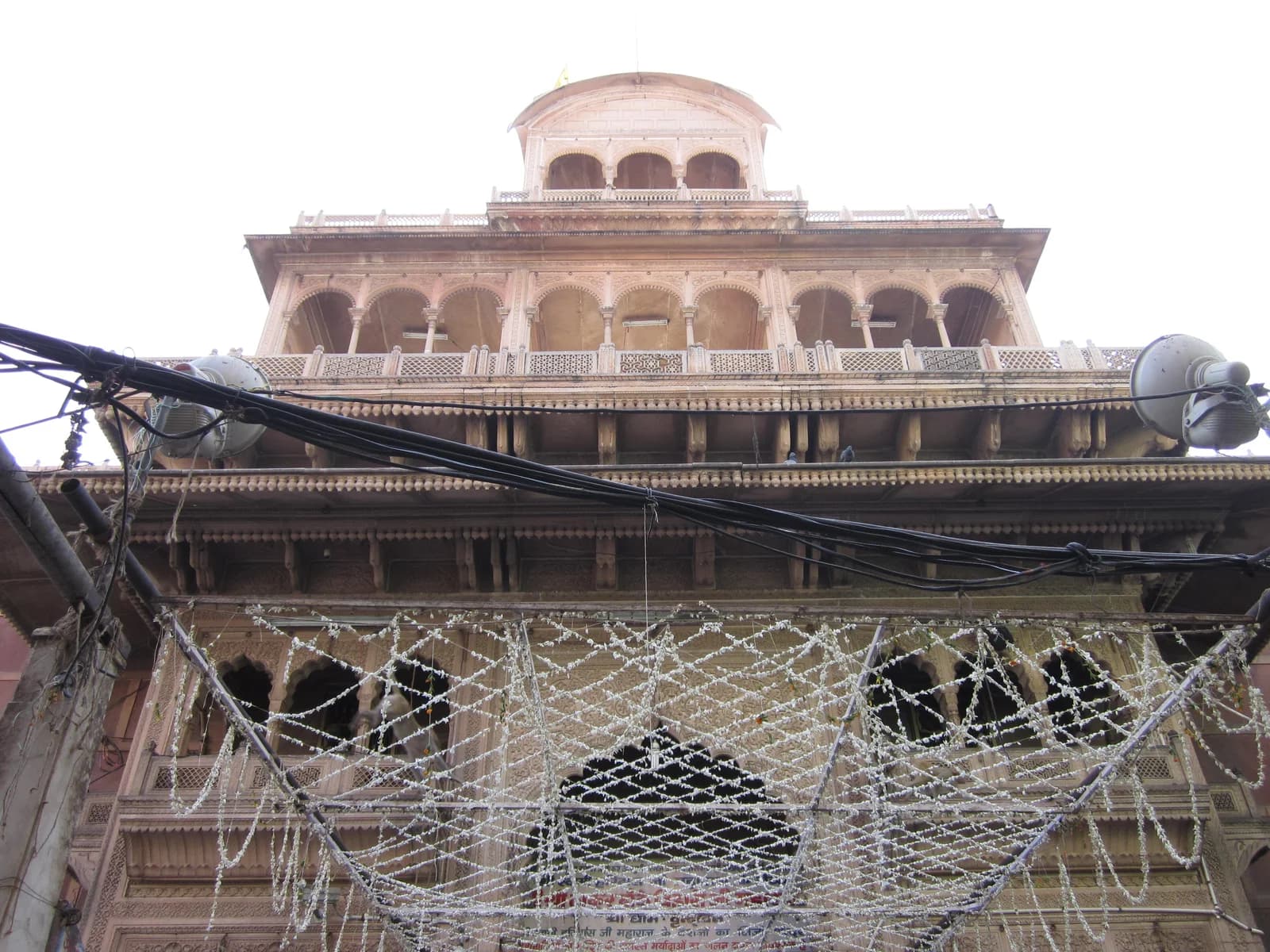
For a focused Old Vrindavan heritage walk, follow this sequence: Shri Banke Bihari Temple → Shri Radha Raman Temple → Shri Radha Damodar Temple → Seva Kunj → Nidhivan. These five sacred places form a practical walking circuit connecting Krishna devotion, the sixteenth-century Goswami tradition and Vrindavan's historic groves. All are within the old temple quarter, but the shortest pedestrian route is not always available because of queues, one-way barricades and temporary diversions. If Banke Bihari has a long queue, visit the other shrines first and return during a suitable darshan window. If either sacred grove is approaching its closing time, prioritise that visit. Allow a flexible half-day rather than relying on a fixed walking-time estimate.
Banke Bihari to Radha Raman, Radha Damodar and Seva Kunj: The Five-Stop Route
- Start at Shri Banke Bihari Temple. Have darshan before leaving the Banke Bihari lanes if the entry queue is manageable. This temple centres on Thakur Banke Bihari, whose appearance is associated in temple tradition with the saint-musician Swami Haridas and Nidhivan. Its distinctive curtain darshan reflects a living devotional tradition rather than a continuous view of the deity. Check the official darshan information before setting out because morning and evening access varies by season. Follow the permitted pedestrian exit rather than assuming the entry lane remains open for departure.
- Continue to Shri Radha Raman Temple. From the Banke Bihari area, ask for Radha Raman Ghera or Radha Raman Mandir towards the Keshi Ghat side of Old Vrindavan. Follow local signs and confirm the currently open approach at junctions. Radha Raman is revered for its Krishna deity, traditionally believed to have manifested from a Shaligram stone worshipped by Gopala Bhatta Goswami. The temple's historical account associates this appearance with 1542. This stop is particularly meaningful for visitors interested in intimate deity worship and the early Gaudiya Vaishnava heritage of Vrindavan.
- Walk to Shri Radha Damodar Temple. Ask for Radha Damodar Mandir in the Seva Kunj neighbourhood rather than attempting to cross a restricted grove or closed side entrance. Radha Damodar is associated with Jiva Goswami and the theological, literary and devotional heritage of the Goswami tradition. The Mathura district administration identifies it as one of Vrindavan's seven principal Goswami temples and dates its establishment to 1542. Visitors also honour its associated samadhi and devotional spaces. Follow instructions about which areas are accessible to pilgrims.
- Visit Seva Kunj. This sacred grove is more than another temple stop. In Vaishnava tradition, Seva Kunj remembers Krishna lovingly serving Radha and is associated with their divine pastimes. Its atmosphere and spiritual meaning differ from the formal deity worship of Radha Raman and Radha Damodar. Enter through an authorised visitor gate, respect protected sections and allow time for quiet reflection. If the entrance is closed, continue to another accessible stop instead of attempting to enter through a restricted passage.
- Finish at Nidhivan. Follow the permitted public lanes towards Nidhivan's visitor entrance. Nidhivan is associated with Swami Haridas, the traditional appearance of Banke Bihari and the divine pastimes of Radha and Krishna. Ending here reconnects the walk with the spiritual story introduced at Banke Bihari Temple. Nidhivan and Seva Kunj are separate sacred groves with related but distinct traditions. Respect local closure practices and never assume that an after-dark visit is permitted.
Why Are These Five Shrines Historically and Spiritually Different?
Banke Bihari represents the devotional lineage of Swami Haridas and a distinctive form of Krishna darshan. Its history connects the present temple to Nidhivan, where the deity is traditionally believed to have appeared. The temple's practice of periodically drawing the curtain is an important part of its devotional character.
Radha Raman is associated with Gopala Bhatta Goswami and a deity revered as self-manifested from Shaligram. Radha Damodar is associated with Jiva Goswami and the development of Gaudiya Vaishnava scholarship and worship. These temples help visitors understand different strands of Vrindavan's sixteenth-century religious heritage.
Seva Kunj commemorates the loving service of Krishna to Radha, while Nidhivan is especially linked to Swami Haridas and the appearance tradition of Bihariji. Accounts of divine appearances and pastimes belong to living religious belief and should be understood respectfully as such, rather than presented as independently established historical events.
This suggested order connects deity worship, Goswami heritage and sacred-grove traditions. It is not a compulsory religious sequence; devotees attending a particular aarti or following family traditions may prefer another order.
Best Time to Begin the Old Vrindavan Mandir Walking Route
A morning darshan window is often a practical starting point, provided the individual temples are open. An afternoon circuit is possible when access schedules allow, but Seva Kunj and Nidhivan should not be left until after their permitted visiting periods. Do not assume that all five sites follow the same opening and closing hours.
Banke Bihari operates seasonal darshan schedules, and festivals or special observances can change normal arrangements. Other temples may pause for bhog, seva or other rituals. Confirm current schedules through the relevant temple authorities or at their entrances. For Banke Bihari, consult its official visitor guidance.
Allow much of a morning or afternoon rather than treating the route as a quick sightseeing walk. Banke Bihari queues can take substantially longer than the walking itself. Ekadashi, Poornima, Amavasya, weekends and major festivals are particularly important crowd considerations. The temple's official guidance advises vulnerable visitors, including older pilgrims and families with small children, to avoid peak days.
Alternative Routes When Temples Close or Barricades Change
Option 1: Banke Bihari Has a Long Queue
Reverse the priority without abandoning the pilgrimage: visit Radha Raman and Radha Damodar first, continue to Seva Kunj and Nidhivan while accessible, then return to Banke Bihari during a confirmed darshan window. This preserves the heritage circuit without spending the entire available period in one queue. However, returning later does not guarantee shorter waiting times.
Option 2: Radha Raman or Radha Damodar Is Closed
If Radha Raman is temporarily closed, proceed towards Radha Damodar and the sacred groves, then return if reopening fits your day. If Radha Damodar is closed, check whether Seva Kunj is accessible and continue there. Avoid waiting indefinitely for an unconfirmed reopening. A separate visit is preferable to rushing through all the remaining stops.
Option 3: A One-Way Barricade Blocks the Direct Lane
Follow the authorised pedestrian diversion, even when it requires a longer approach through Old Vrindavan. Ask police personnel, volunteers or established local shopkeepers for the currently permitted entrance to the next named destination. A navigation app may identify the correct temple but still suggest a temporarily blocked lane. Never push against the pedestrian flow or attempt to bypass crowd barriers simply to maintain the original sequence.
Option 4: Seva Kunj or Nidhivan Is Closing
Prioritise whichever sacred grove remains open and postpone the other. If both are closed, complete any accessible temple darshan instead. Nidhivan and Seva Kunj have religiously significant closure customs; visitors should respect these rather than treating them as attractions available throughout the night.
Practical Arrival and Walking Advice
This circuit is best approached on foot. Visitors arriving by taxi, private car or e-rickshaw should use an accessible drop-off point outside any restricted pedestrian zone. The Banke Bihari Temple's official visitor information states that private vehicles cannot be driven all the way to the mandir. Do not assume that vehicles can reach every shrine entrance.
Wear comfortable footwear that can be removed easily for temple visits. Carry manageable belongings, keep valuables secure and confirm photography or bag restrictions locally. Old Vrindavan's narrow lanes can become congested, while heat in summer and shorter daylight in winter affect the comfort of longer walks. During Holi, Kartik and other major pilgrimage periods, additional crowd controls may affect movement.
For senior pilgrims and families, completing two or three meaningful darshans comfortably may be better than rushing through five sites. Step-free access, wheelchair arrangements and assistance across the entire circuit are not verified. Check individual requirements before committing to the walk. Banke Bihari publishes guidance on assistance for visitors with special circumstances, subject to availability and applicable procedures.
Staying within the temple quarter can make breaks more practical. ZenithSuites Vrindavan is located in Old Vrindavan near Banke Bihari Temple, allowing guests to consider returning to their room between darshan visits. This proximity does not bypass queues or temporary diversions. The property has no on-site parking and describes paid off-site parking nearby; confirm current drop-off arrangements before arrival.
Frequently Asked Questions
Can I walk from Banke Bihari to Radha Raman Temple?
Yes. Both temples are in Old Vrindavan's historic temple quarter, and walking is a practical way to connect them. Actual pedestrian distance and travel time depend on the available entrance, crowd management and temporary lane diversions.
Should I visit Seva Kunj or Nidhivan first?
For this five-stop route, visit Seva Kunj after Radha Damodar and finish at Nidhivan. If one grove is nearing its permitted closing time, visit the accessible one first. Their spiritual associations overlap but they are distinct places.
Can I complete this circuit during evening darshan?
Only when the other sites' access windows permit it. For a late evening arrival, prioritise Banke Bihari and any other temple confirmed open. Plan Seva Kunj and Nidhivan during permitted daytime visiting hours rather than assuming entry after dusk.
The most practical approach: retain the five named stops as your heritage route while allowing actual opening hours, queues and pedestrian instructions to determine your movement. This keeps the pilgrimage meaningful without turning darshan into a race.
ZenithSuites
The ZenithSuites Vrindavan Editorial Team creates practical, respectful guides for temple visits, family pilgrimage and stays in the sacred lanes of old Vrindavan. Current temple and civic guidance should always be checked close to travel.
Plan Your Vrindavan Stay Near Shri Banke Bihari Temple
Compare Standard, Deluxe, Suite and Family Suite rooms approximately 120 metres in direct proximity from Shri Banke Bihari Temple, with transparent arrival and parking guidance.
Compare Vrindavan Rooms