
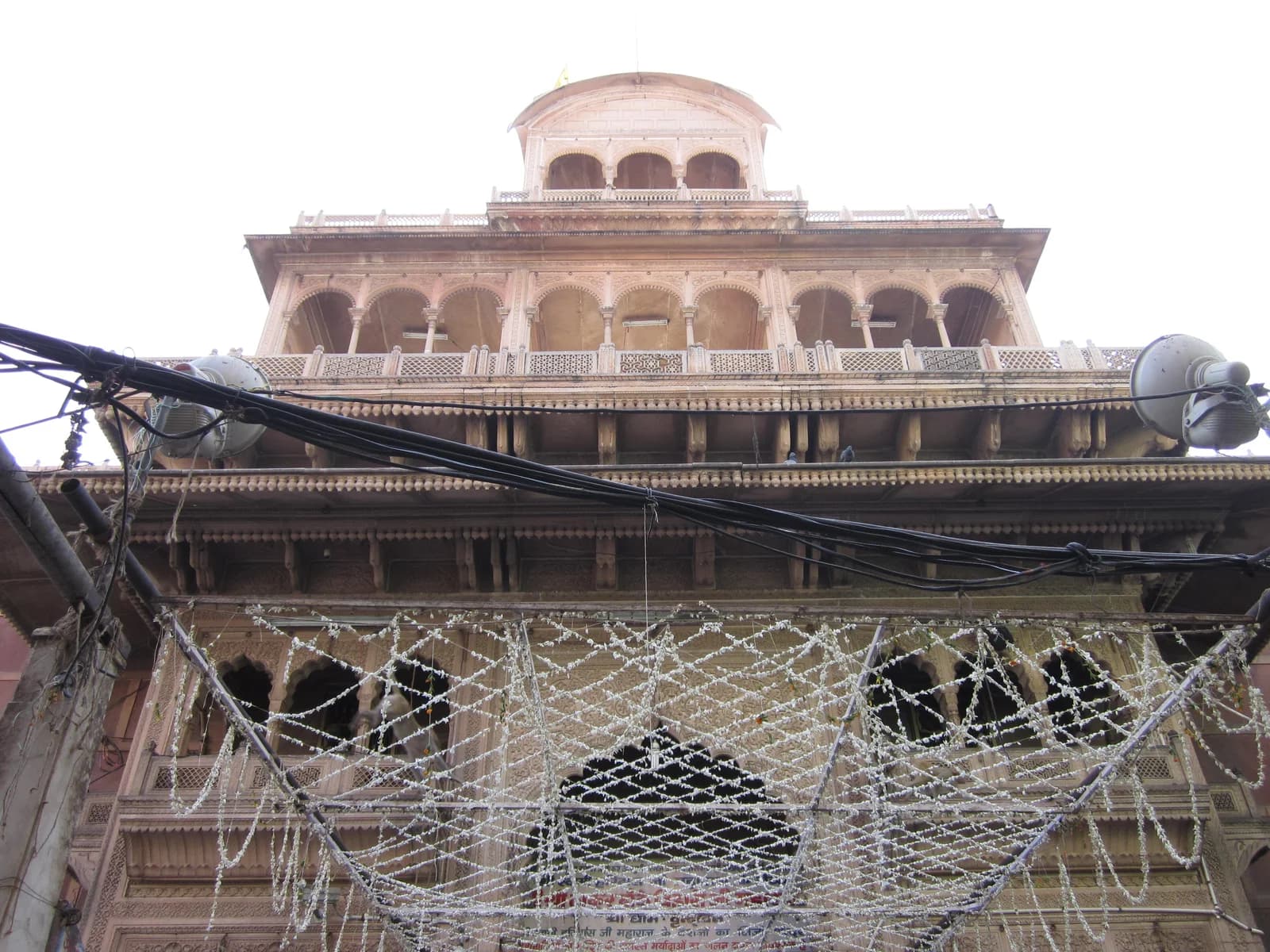
Driving from Delhi to Vrindavan, choose the Yamuna Expressway via Noida, Greater Noida and the Mathura exit if you want a largely access-controlled highway. Choose the Delhi–Mathura road via Faridabad, Palwal, Hodal and Kosi Kalan if you are starting in south Delhi or Faridabad, or live traffic makes that route more practical. For Shri Banke Bihari Temple, neither route ends at the temple door: park at a permitted outer parking area in Vrindavan, then continue by e-rickshaw where allowed and on foot through Old Vrindavan. Before departure, check your actual route, toll estimate and traffic diversions. The most important decision is not which road looks fastest on paper, but where your car can legally stop when you arrive.
Delhi to Vrindavan distance: what should you enter in maps?
The Delhi to Vrindavan distance is not one fixed number. A journey starting near Noida or east Delhi differs from one beginning in Dwarka, central Delhi or south Delhi; Yamuna Expressway and NH19 approaches also cover different lengths. Rough trip-planning estimates commonly fall around 150–180 km, but that is not a verified distance from your address. Check the live distance to your parking or permitted drop-off point, not simply the pin for Banke Bihari Temple.
Yamuna Expressway vs NH19: which road should you choose?
Yamuna ExpresswayDelhi → Noida → Greater Noida → Yamuna Expressway → Mathura exit → VrindavanMore continuous, access-controlled highway drivingExpressway tolls, Delhi/Noida approach congestion and a separate local approach after the exitNH19 / Delhi–Mathura roadDelhi → Badarpur/Faridabad → Ballabhgarh → Palwal → Hodal → Kosi Kalan → Chhata/Chhatikara → VrindavanConvenient for parts of south Delhi and Faridabad; avoids a detour towards Greater NoidaUrban approaches, merging traffic and possible slow sections or tollsHow to drive via the Yamuna Expressway
- Reach Noida or Greater Noida. From Delhi, take the appropriate connection towards the Noida–Greater Noida Expressway. The exact link depends on where in Delhi you begin and current road closures.
- Join the Yamuna Expressway towards Mathura and Agra. Follow the marked carriageway and check live traffic, weather warnings and official speed-limit signs. The expressway is not a direct road into Banke Bihari's temple lanes.
- Leave at the signed Mathura interchange. Follow current map guidance and local signs towards Vrindavan; roadworks may change the preferred connecting road. Do not continue towards Agra merely because the destination pin remains farther ahead.
- Switch your destination to an approved parking point. As you approach Vrindavan, look for police instructions and signs directing visitor cars. Finish the last part by the permitted local mode.
The Yamuna Expressway Industrial Development Authority (YEIDA) describes the Greater Noida–Agra expressway as an access-controlled road. That improves route continuity but does not remove the need to assess fog, tyre condition, fatigue or the slower last-mile traffic inside Vrindavan. In winter, follow posted temporary speed restrictions rather than assuming the normal limit always applies.
When the Faridabad–Palwal route makes more sense
For drivers already on the Delhi–Faridabad side, the traditional Mathura Road/NH19 corridor runs through or past Faridabad, Ballabhgarh, Palwal, Hodal and Kosi Kalan. Near Chhata and Chhatikara, follow the signed turn towards Vrindavan. This can be geographically sensible without first moving east to Greater Noida. The temple's official visitor guidance also identifies the Delhi highway approach and Chhatikara as a gateway to Vrindavan.
NH19 is not necessarily toll-free: check charges on your route. Reassess return traffic independently, especially around Faridabad and Delhi.
Yamuna Expressway tolls: how to check the correct amount
The toll for a Delhi to Vrindavan by road journey depends on the entry and exit used, vehicle class and the latest notified tariff. Jewar, Mathura and Agra are major toll locations, but the charge for your Mathura exit journey must not be confused with the cost of driving the entire expressway to Agra. Reported 2026 full-route car totals differ between published sources, so an exact current fee is not confirmed here.
Before setting off, look at the toll estimate for your actual route in your navigation app and cross-check the current YEIDA tariff or toll-plaza information. Keep adequate FASTag balance and check whether there are other tolled sections on your Delhi approach or return route. If comparing routes for cost, add fuel and potential extra kilometres as well as tolls. A road that looks cheaper in tolls may still be less convenient for your starting location.
Where should the car stop for Banke Bihari Temple?
Do not plan to drive up to Shri Banke Bihari Temple. The temple's official website explicitly says personal vehicles cannot be brought all the way to the mandir and visitors need to use parking facilities in Vrindavan. The practical arrangement is to stop at an outer, permitted car park or police-approved drop-off, transfer to an e-rickshaw if it is operating on that route, and walk the remaining old-town lanes.
Approaches associated with Chhatikara, the main Vrindavan road, and outer areas such as Rukmini Vihar can be useful landmarks when looking at parking options, but none is a guaranteed open parking facility. Availability, charges, walking routes and shuttle access vary. Follow the parking signs and police staff actually present, not an old online list promising a spot next to the temple. Confirm the parking location's opening arrangements and payment method on arrival.
Carry water and essential medicines, note your car park's name, and agree the e-rickshaw fare and permitted destination before boarding. Rickshaws may stop at a market approach or barricade rather than the temple lane.
How to enter Old Vrindavan after parking
Tell your e-rickshaw driver or local guide that your destination is Shri Banke Bihari Mandir, Old Vrindavan, then follow the current pedestrian approach indicated by police or local signage. The route may pass busy shopping lanes around the temple neighbourhood. On heavy-crowd days the walk may begin farther away because vehicles, including e-rickshaws, can be held at outer checkpoints.
The approach walk is separate from the darshan queue. Temporary barriers and pedestrian flow can alter the route. Agree on an easily recognised meeting point and return pickup location outside the busiest lane.
Vrindavan car entry time: are there fixed hours for private cars?
There is no verified citywide private-car entry window that a visitor should rely upon for reaching Banke Bihari's neighbourhood. Local access is controlled according to traffic police directions, pedestrian numbers, barriers and special arrangements. Vehicle entry to an outer road must never be read as permission to enter VIP Gali or the temple approach.
Some property-reported observations have suggested lighter-access windows before approximately 8:30 AM, around 1:00–3:30 PM, and after approximately 9:30 PM. These are not official timings, permissions or guaranteed access slots. They can be superseded at any moment, including on an ordinary weekday. Confirm current instructions with local traffic police and your accommodation before approaching a restricted lane; if directed to park outside, comply and continue on foot or by authorised local transport.
What changes on weekends, holidays and festivals?
On Saturdays, Sundays, Ekadashi, Poornima, Amavasya and major observances such as Holi and Janmashtami, expect the possibility of longer queues and stronger vehicle controls. The Banke Bihari Temple's official darshan guidance warns of particularly heavy attendance on peak days, including the year-end holiday period, and advises vulnerable visitors to avoid the busiest dates.
A closure of a road segment, diversion to another parking area or restriction on e-rickshaws may make yesterday's route unusable. Check for current police advisories when planning a festival visit; the exact restrictions for your travel date are unconfirmed until officially announced. If travelling with older relatives, infants or someone who cannot walk comfortably, prefer a quieter date when possible. Ask the temple about any current assistance arrangements rather than assuming wheelchair access or a special entrance will be available.
Darshan is also separate from driving time. Temple hours change between summer and winter, and special dates may have different schedules. Verify the day's timing from the official temple website before planning the departure from Delhi. A clear expressway run cannot guarantee entry before the mandir closes for a session.
Planning a practical day trip or overnight stay
For a Delhi–Vrindavan day trip
Make Banke Bihari your priority if that is the purpose of the drive. Park once, complete the permitted e-rickshaw and walking transfer, and leave a flexible margin for darshan rather than booking another activity immediately afterwards. Nearby Old Vrindavan shrines, including Radha Vallabh Temple and Madan Mohan Temple, may fit a walking circuit if the group is comfortable and their individual opening hours permit. Do not attempt to cover every temple on a crowded afternoon.
If you want Prem Mandir and ISKCON as well
Prem Mandir and ISKCON Vrindavan are away from the tight Banke Bihari lanes. It is usually more practical to treat them as a separate road-transport segment before entering, or after leaving, the old-town core. If you already parked outside for Banke Bihari, decide whether to retrieve the car or use permitted local transport for the next segment. Check both temples' current opening and programme timings before deciding the order.
If you are staying overnight near the temple
An Old Vrindavan base can reduce repeat transfers between morning and evening darshan. ZenithSuites Vrindavan is in Gali No. 5 (VIP Gali), Madan Mohan Banke Bihari Path, near the temple; this makes returning to the room between visits practical when pedestrian routes are open. It has no on-site parking and describes nearby paid off-site parking. Guests should contact the property for current parking and lawful drop-off guidance before arrival, particularly with luggage. Being close in straight-line distance does not establish the actual walking route.
Questions drivers commonly ask
Can I drive directly from Delhi to Banke Bihari Temple?
You can drive to Vrindavan, but not directly to the temple entrance. Use a permitted parking or drop-off location and finish by e-rickshaw where allowed, then on foot. The final distance depends on the active crowd-control route.
Is the Yamuna Expressway always faster than NH19?
No. It offers a more continuous expressway section, but reaching it from Delhi, taking the Mathura exit and entering Vrindavan all add journey time. NH19 can suit travellers starting around Faridabad. Compare both live routes rather than relying on a fixed travel-time promise.
Can I enter VIP Gali in my car early in the morning?
Do not assume so. Property-reported lighter-traffic periods are not police authorisation. Even at an apparently quiet hour, barriers or local orders may prohibit entry. Confirm the day's permitted drop-off location and use outer parking when directed.
Bottom line: Choose Yamuna Expressway or NH19 using live conditions, confirm tolls and darshan hours, and treat the final approach as a separate e-rickshaw-and-walking journey. Never drive towards the temple gate against local restrictions.
ZenithSuites
The ZenithSuites Vrindavan Editorial Team creates practical, respectful guides for temple visits, family pilgrimage and stays in the sacred lanes of old Vrindavan. Current temple and civic guidance should always be checked close to travel.
Plan Your Vrindavan Stay Near Shri Banke Bihari Temple
Compare Standard, Deluxe, Suite and Family Suite rooms approximately 120 metres in direct proximity from Shri Banke Bihari Temple, with transparent arrival and parking guidance.
Compare Vrindavan Rooms