
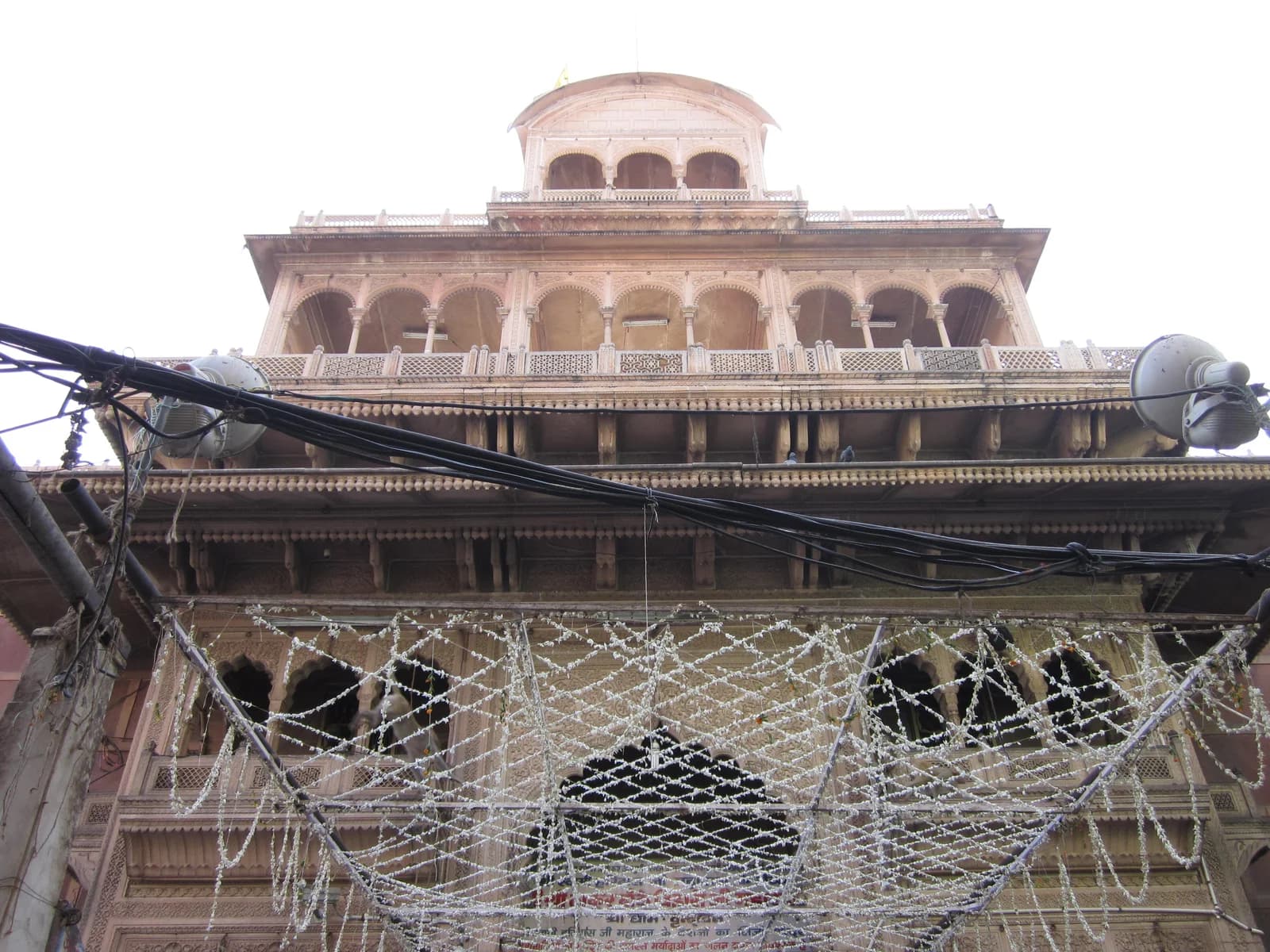
Govind Dev Ji Temple in Vrindavan is the monumental red-sandstone shrine associated with Shri Govind Dev, a form of Lord Krishna, in the historic temple quarter of Vrindavan, Uttar Pradesh. Visit it primarily for its sixteenth-century architecture and Gaudiya Vaishnava heritage; for present-day deity darshan, also locate the smaller worship shrine associated with the complex. There is no independently confirmed official schedule for the historic monument's current opening hours or the adjoining shrine's daily seva in the sources checked for this guide. If darshan at a particular hour is essential, verify that day's worship periods locally before travelling. The Vrindavan temple is distinct from the much-visited Govind Dev Ji Temple beside the City Palace in Jaipur.
Govind Dev Ji Temple Vrindavan timings: what is confirmed?
Online listings give conflicting hours and often fail to distinguish the historic building from the nearby worship shrine or Jaipur temple. Mathura district tourism information does not publish a verified current timetable. The Archaeological Survey of India (ASI) lists Govind Deo as a protected monument but provides no visiting hours. No specific morning or evening slot can therefore be presented as officially confirmed.
For heritage viewing, aim for daylight, subject to access on arrival. For darshan or aarti, confirm the active shrine's morning, evening and midday arrangements locally. Seeing the exterior does not guarantee interior access. Festivals, conservation and management decisions can alter arrangements.
Where is Govind Dev Ji Temple in Vrindavan?
Govind Dev Ji Temple, also called Govind Deo or Govinda Deva Temple, stands in Vrindavan, Mathura district, Uttar Pradesh 281121, among the old Goswami-associated shrines rather than the Prem Mandir–ISKCON corridor. Search for Govind Dev Temple, Vrindavan, Uttar Pradesh and verify that the map points to the historic red-sandstone building, not Jaipur.
Shri Rangji Temple fits the wider eastern Old Vrindavan circuit. Radha Vallabh, Madan Mohan and Banke Bihari belong to the older pilgrimage area towards the west and north-west; pedestrian routes depend on lane access.
Govind Dev Ji Mandir history: why the structure matters
Govind Dev is linked with Shri Rupa Goswami and the sixteenth-century Gaudiya Vaishnava tradition. Devotional accounts associate him with rediscovering Govind Dev's image. Raja Man Singh I of Amber, a noble in Akbar's court, sponsored the grand temple around 1590 CE.
Historical accounts describe an exceptionally tall shrine, traditionally said to have had seven storeys; that is not the number visible today. Upper portions were damaged or dismantled in the late seventeenth century. The remaining structure shows the scale of early modern Krishna worship in Braj.
The original Govind Dev image was moved from Vrindavan for safety and eventually worshipped in Jaipur. Thus Vrindavan preserves the historic architectural site, while the original deity is associated with Jaipur's Govind Dev Ji Temple. Temple-history accounts describe continued Vrindavan worship of a representative image in a nearby shrine. Ask locally where the intended seva takes place.
What to look for in the red-sandstone architecture
Notice the red-sandstone walls, elevated base, carved pillars, large arches and interior vaulting where accessible. The design combines temple functions with forms associated with Mughal-period northern Indian architecture. Its hall-like proportions contrast with the compact sanctums of nearby shrines.
View the exterior from a safe public position, then look for the permitted entrance. The truncated upper profile reflects the site's history. Steps and raised platforms may present obstacles; step-free access is not verified. Respect conservation barriers and fragile masonry.
How to reach Govind Dev Ji from Old Vrindavan
From Banke Bihari and Radha Vallabh: Visitors comfortable walking can link these shrines with Govind Dev through Old Vrindavan. Allow for crowds, diversions and turns; follow a pedestrian route, not a straight-line distance.
From Madan Mohan: Compare its elevated historic setting with Govind Dev's sandstone hall. Walk if comfortable; an e-rickshaw may help for road portions in heat or crowds.
From Mathura or outer Vrindavan: Travel towards Old Vrindavan by local road transport and walk the final section where vehicle access ends. Agree on a drop-off before departing. Private cars cannot be assumed to reach the entrance; current parking charges, sites and restrictions are unconfirmed.
A sensible temple circuit for different interests
History and architecture, roughly 60–90 minutes: View Govind Dev's exterior and accessible interior, then visit Rangji if open. Compare sixteenth-century sandstone with Rangji's South Indian-influenced design. This is a suggested touring allowance, not a verified opening period or queue estimate.
Old Vrindavan darshan, half a day: Start with Banke Bihari or Radha Vallabh during confirmed darshan, add Madan Mohan if feasible, then see Govind Dev's historic building. Include the associated active shrine only when its seva hours fit. Midday closures vary, so prioritise the most important darshan.
Families and senior pilgrims: Choose two or three stops. Steps and uneven approaches may matter more than distance. Use permitted local transport and confirm accessibility at each site. Staying in Old Vrindavan makes breaks possible; ZenithSuites Vrindavan, near Banke Bihari, offers a convenient base, but has no on-site parking and describes paid parking off-site.
Is Govind Dev a heritage visit or an active darshan stop?
It is best understood as both a major historic sacred site and part of an ongoing worship tradition, but not as a promise that the monumental hall operates like a modern darshan temple. If your priority is the historic building, budget around 30–45 minutes to view it thoughtfully, subject to access. If your priority is aarti, establish the separate active shrine's timing before arrival and allow for worship-related waiting. The total time can be considerably longer when combined with Banke Bihari or other crowded temples.
No current official notice confirming an entrance fee, photography policy, special-access arrangement or accessibility provision for this specific visit was located. Do not assume that a general ASI rule settles the arrangements at a functioning religious complex. Follow posted instructions and ask permission before photographing any worship area.
Frequently asked questions
What are the official Govind Dev Ji Temple Vrindavan timings today?
An independently verified official daily timetable for the historic monument and the associated worship shrine was not available in the checked sources. Confirm access and seva periods locally on your date; do not substitute the Govind Dev Ji Jaipur schedule.
Where is the original Govind Dev Ji deity?
The original image traditionally associated with Vrindavan's Govind Dev temple was transferred from Braj and is worshipped at the Govind Dev Ji Temple in Jaipur. Vrindavan retains the major historic building and a continuing local worship tradition.
Can I visit Govind Dev, Madan Mohan and Radha Vallabh on the same outing?
Yes, these sites fit an Old Vrindavan outing for visitors comfortable with walking and local transport. Allow for separate shrine schedules, narrow lanes and any uphill or stepped approach; reduce the number of stops for anyone with limited mobility.
Confirm details before setting out
For identification and heritage status, consult the ASI list of centrally protected monuments, which records the Temple of Govind Deo at Brindaban, Mathura, and the Mathura district's Sapt Devalaya overview. These establish context, not a current opening timetable. For a specific day's darshan, access, fees or restrictions, the local temple management and on-site notices are the appropriate final checks. Visit Govind Dev for its exceptional place in Vrindavan's history, then fit the living seva around the confirmed schedule rather than the other way round.
ZenithSuites
The ZenithSuites Vrindavan Editorial Team creates practical, respectful guides for temple visits, family pilgrimage and stays in the sacred lanes of old Vrindavan. Current temple and civic guidance should always be checked close to travel.
Plan Your Vrindavan Stay Near Shri Banke Bihari Temple
Compare Standard, Deluxe, Suite and Family Suite rooms approximately 120 metres in direct proximity from Shri Banke Bihari Temple, with transparent arrival and parking guidance.
Compare Vrindavan Rooms