
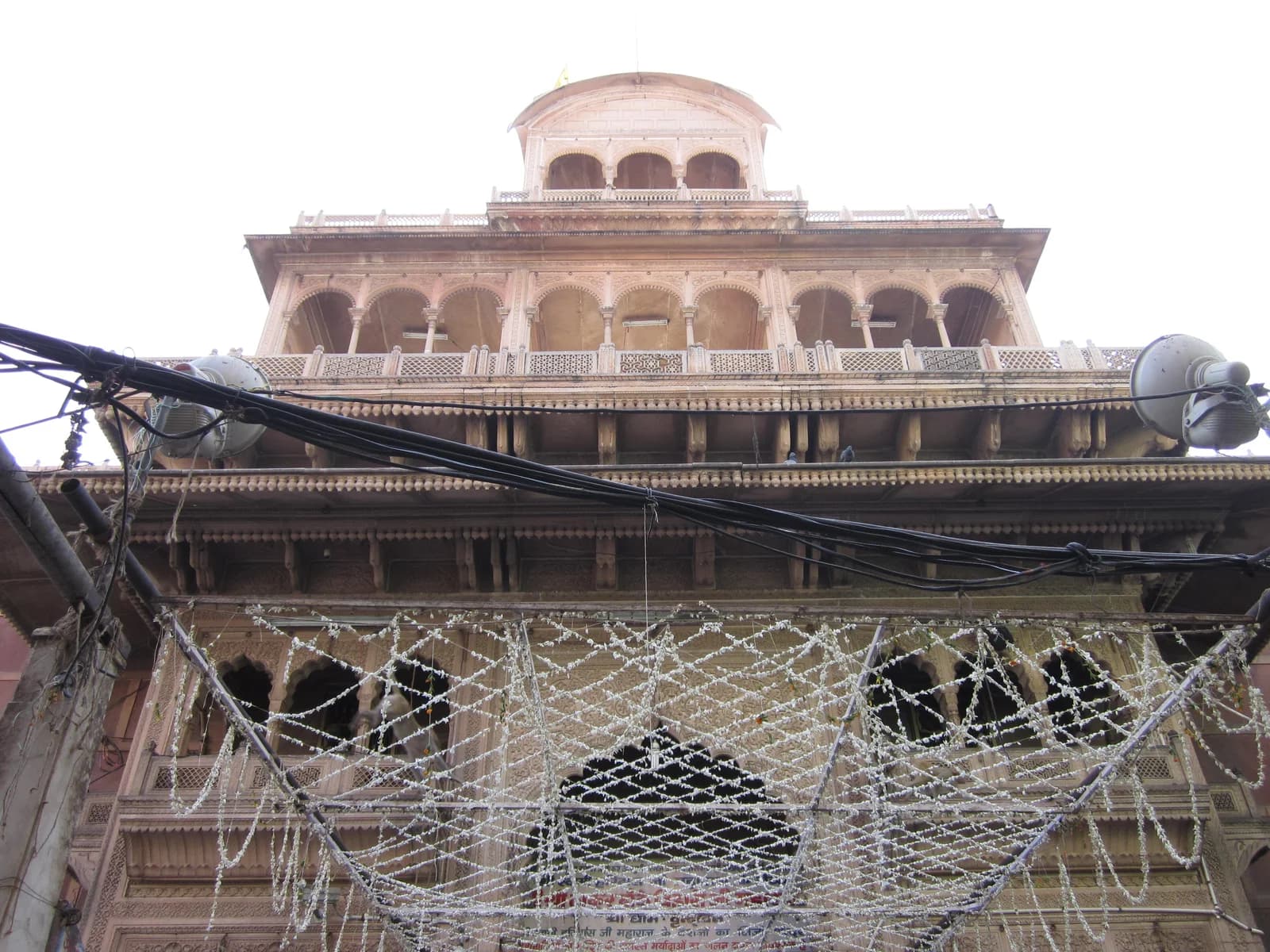
The most practical Mathura half-day itinerary from Vrindavan is to visit Shri Krishna Janmabhoomi first, continue to Shri Dwarkadhish Mandir, and finish at Vishram Ghat if time permits. This route connects two of Mathura's most important Krishna temples with the historic Yamuna riverfront without unnecessarily crossing the city twice. Allow approximately five to six hours for the complete outing from Old Vrindavan, including road travel, security checks, darshan and the return journey. This is a planning estimate, not a guaranteed duration. A prearranged cab is generally more convenient for families and seniors, while an auto-rickshaw can suit smaller groups. Both temples have changing darshan arrangements, so confirm their opening windows before departure. If time is limited, prioritise Krishna Janmabhoomi and Dwarkadhish; Vishram Ghat is the optional third stop.
The Recommended Mathura Half-Day Route
The simplest sequence is Old Vrindavan → Shri Krishna Janmabhoomi → Shri Dwarkadhish Temple → Vishram Ghat → Vrindavan. Janmabhoomi is in the Katra Keshavdev area, while Dwarkadhish and Vishram Ghat are close together in the older, Yamuna-side part of Mathura. This grouping reduces unnecessary travel between neighbourhoods.
The following schedule illustrates a possible morning outing. These are suggested planning windows, not verified temple opening hours or live journey times.
7:00–8:00 amOld Vrindavan to MathuraTravel by cab or arranged auto to the accessible drop-off near Shri Krishna Janmabhoomi.8:00–9:30 amShri Krishna JanmabhoomiAllow for security screening, permitted-item arrangements and darshan.9:30–10:30 amShri Dwarkadhish MandirTravel to old Mathura and enter during a confirmed morning darshan window.10:30–11:00 amVishram GhatTake an optional riverside visit if the group has enough time and energy.Late morning onwardReturn to VrindavanMeet your vehicle at the agreed pickup location and allow for traffic.If security queues at Janmabhoomi are longer than expected, shorten or skip Vishram Ghat. If Dwarkadhish's morning darshan is approaching its closing window, consider reversing the two temple stops after checking Janmabhoomi's schedule.
Getting from Old Vrindavan to Mathura
Mathura's Krishna Janmabhoomi and Dwarkadhish temples require road transport from Old Vrindavan. They are not part of the walking circuit around Banke Bihari Temple. A cab or auto-rickshaw can cover the intercity journey, although final access near individual temple entrances may require walking or local transport.
Guests staying at ZenithSuites Vrindavan, near Shri Banke Bihari Temple, can conveniently combine local Old Vrindavan darshan with a separate Mathura excursion. Returning to the accommodation between pilgrimage outings also provides an opportunity to rest. The property does not have on-site parking and describes paid off-site parking nearby. Vehicle access through Old Vrindavan's narrow lanes should never be assumed.
Before leaving, agree with your driver on the pickup point, both Mathura temple stops, waiting arrangements and return journey. Ask whether the quoted fare includes local repositioning if vehicles cannot enter particular streets. Exact travel time depends on traffic, the available approach roads and temporary restrictions.
Stop 1: Shri Krishna Janmabhoomi Temple
Shri Krishna Janmabhoomi, also known as Shri Krishna Janmasthan, is the sacred complex revered in Hindu tradition as the birthplace of Lord Krishna. The Garbh Grih is associated with the place where Krishna was born to Devaki and Vasudeva during their imprisonment by Kansa. Other important shrines within the complex include Keshavdev Temple and Bhagwat Bhavan.
For many pilgrims, this is the most significant stop in Mathura. Unlike a simple roadside temple visit, the Janmasthan complex has controlled entry and security arrangements that can affect the time required for darshan.
Security Checks and Mobile Phone Restrictions
Visitors should expect security screening at Shri Krishna Janmabhoomi. A June 2026 PTI report quoting a temple official confirms restrictions on carrying mobile phones and purses inside the complex. Other electronic devices and personal belongings may also be restricted, but the complete current permitted-item list has not been independently confirmed.
Carry as few belongings as practical, avoid unnecessary bags and cameras, and follow the instructions of authorised security personnel. Confirm whether an official storage facility is operating before relying on it. Storage availability, charges and procedures are unconfirmed and may change. Do not leave valuables with unofficial attendants.
Krishna Janmabhoomi Darshan Timings
The official Shri Krishna Janmasthan Seva Sansthan website distinguishes Garbh Grih darshan from the opening sessions of other shrines. However, its published seasonal schedules contain date references from 2024–25, so those hours should not be treated as confirmation of current 2026 timings.
Before visiting, verify the applicable schedule directly with the temple trust. Festival arrangements, temporary restrictions, security procedures and entry routes may change. The time spent travelling to the complex is separate from the time required for security checks and darshan.
Stop 2: Shri Dwarkadhish Mandir, Mathura
After Janmabhoomi, continue towards Shri Dwarkadhish Temple in the Vishram Bazar area. Here, Lord Krishna is worshipped as Dwarkadhish, the Lord of Dwarka. The historic temple is an important centre of Pushtimarg devotional worship and is known for its traditional architecture and daily seva rituals.
According to the Mathura district administration, the present temple structure dates to 1814. Unlike Janmabhoomi's birthplace-focused pilgrimage, the Dwarkadhish experience particularly highlights Krishna's royal form and the living traditions of temple worship.
Krishna Janmabhoomi to Dwarkadhish Distance
The two temples are separated by a few kilometres within Mathura. Government tourism information places Vishram Ghat, near Dwarkadhish, approximately two kilometres from Krishna Janmabhoomi as a general geographic reference. This should not be interpreted as an exact road distance or pedestrian route length.
The actual journey depends on road access, one-way arrangements, security diversions and the final vehicle drop-off. Families should generally use their arranged road transport between the two areas rather than attempt the entire connection on foot.
Dwarkadhish Temple Mathura Timings
Dwarkadhish follows distinct darshan windows associated with its daily rituals, including Mangala, Shringar, Rajbhog and evening worship. Visitors should not assume that the temple remains continuously open between morning and evening.
A March 2026 local news report documented changes to evening darshan sessions, demonstrating that older schedules may become inaccurate. Exact current timings for the intended travel date remain unconfirmed. Verify the applicable morning or evening window through temple authorities before setting your departure time.
If the morning session is nearly over, consider visiting Dwarkadhish before Janmabhoomi. This is particularly useful for families who would otherwise spend time travelling to a closed shrine.
Stop 3: Vishram Ghat on the Yamuna
Vishram Ghat is the most practical optional addition to this Mathura half-day route because it lies near Dwarkadhish Temple. The ghat is traditionally associated with Lord Krishna resting after defeating Kansa. It remains an important devotional place along the Yamuna and offers a different experience from the two temple complexes.
From the Dwarkadhish neighbourhood, visitors can continue through the old-city lanes towards the riverfront. The precise walking approach depends on local access arrangements. Allow additional time for reaching the steps, spending a few moments at the river and returning to the agreed pickup point.
The ghat is best included when both temple darshans have finished comfortably. For seniors, young children and travellers with mobility difficulties, riverfront steps and uneven surfaces may make this addition less suitable. Step-free access has not been verified.
Boat availability, fares, safety arrangements and specific Yamuna aarti timings were not confirmed for the intended visit. If attending an evening Yamuna aarti is the main objective, plan a separate outing around a verified schedule rather than assuming it fits the morning circuit. The Incredible India Vishram Ghat guide provides additional background.
Cab or Auto-Rickshaw: Which Is Better for Families?
The best transport option depends on group size, comfort and the amount of walking each visitor can manage. Neither option guarantees direct access to every temple entrance.
Prearranged cabFamilies, seniors and larger groupsOffers a more comfortable return journey but may need to wait outside restricted streets.Auto-rickshawCouples and small groups travelling lightConfirm passenger capacity, fare, waiting time and return arrangements.Local e-rickshawShort last-mile connections where permittedAvailability and permitted routes vary; it may not cover the entire journey.WalkingNearby old-city stops, particularly Dwarkadhish to Vishram GhatMarket crowds, lane conditions and riverfront steps can affect comfort.For a family with elderly members, a prearranged cab is often the easier choice because it reduces uncertainty around the return trip. However, every traveller may still need to walk from the permitted vehicle stopping point to the relevant entrance.
Current cab fares, auto fares, parking charges and designated drop-off locations have not been verified. Agree on the full trip cost and pickup arrangement before departure. If phones must be deposited at Janmabhoomi, establish the meeting point with your driver in advance.
When Is the Best Time for a Mathura Half-Day Visit?
A morning visit is usually the more practical planning choice when both temples have compatible morning darshan windows. Leaving Old Vrindavan early provides more flexibility than starting just before the expected midday closures. Nevertheless, the temple's confirmed schedule should determine the route, not a generic morning-opening assumption.
During warmer months, exposed streets and queues may become uncomfortable, particularly for children and older visitors. Cooler months can make walking easier, although seasonal weather and local traffic still require consideration.
Janmashtami, Holi and major devotional occasions can involve exceptional crowds and altered access arrangements. On these dates, completing both temples and Vishram Ghat in half a day may not be realistic. Temporary barricades, security diversions and longer darshan queues should be treated as possible changes rather than predictable fixed delays.
If your group has limited mobility or a strict onward departure, choose two temples rather than three stops. A meaningful darshan without unnecessary rushing is more valuable than completing an ambitious checklist.
Frequently Asked Questions
Can Krishna Janmabhoomi and Dwarkadhish be visited in half a day?
Yes, it is a reasonable target on an ordinary day when temple schedules, traffic and queues align. Allow approximately five to six hours from Old Vrindavan as a flexible planning estimate. Security screening, missed darshan windows or exceptional crowds can extend the trip significantly.
Are mobile phones permitted inside Shri Krishna Janmabhoomi?
Recent reporting quoting a temple official confirms restrictions on mobile phones and purses. The complete current entry policy, including electronic devices, storage facilities and other prohibited articles, should be confirmed directly with temple authorities before visiting. Do not assume that every item can be deposited or taken inside.
Should Vishram Ghat be visited before or after Dwarkadhish?
Usually after Dwarkadhish, because the ghat is nearby and can be added without another cross-city journey. However, a confirmed temple darshan window should take priority. If time runs short, skip the ghat or reserve a separate visit for the riverfront.
Returning to Vrindavan After Your Mathura Darshan
A focused Mathura pilgrimage connects three meaningful places: Shri Krishna Janmabhoomi for the sacred birthplace tradition, Dwarkadhish Mandir for Krishna's royal worship, and Vishram Ghat for the Yamuna's devotional heritage. Keeping the route compact helps preserve time and energy for the experience itself.
Confirm current temple timings and security rules, arrange road transport with a realistic pickup point, and keep Vishram Ghat optional. Once back in Old Vrindavan, you can rest before continuing with nearby walking darshans or leave the remainder of the day free. The best half-day route is one that respects both the temples' schedules and your family's comfort.
ZenithSuites
The ZenithSuites Vrindavan Editorial Team creates practical, respectful guides for temple visits, family pilgrimage and stays in the sacred lanes of old Vrindavan. Current temple and civic guidance should always be checked close to travel.
Plan Your Vrindavan Stay Near Shri Banke Bihari Temple
Compare Standard, Deluxe, Suite and Family Suite rooms approximately 120 metres in direct proximity from Shri Banke Bihari Temple, with transparent arrival and parking guidance.
Compare Vrindavan Rooms