
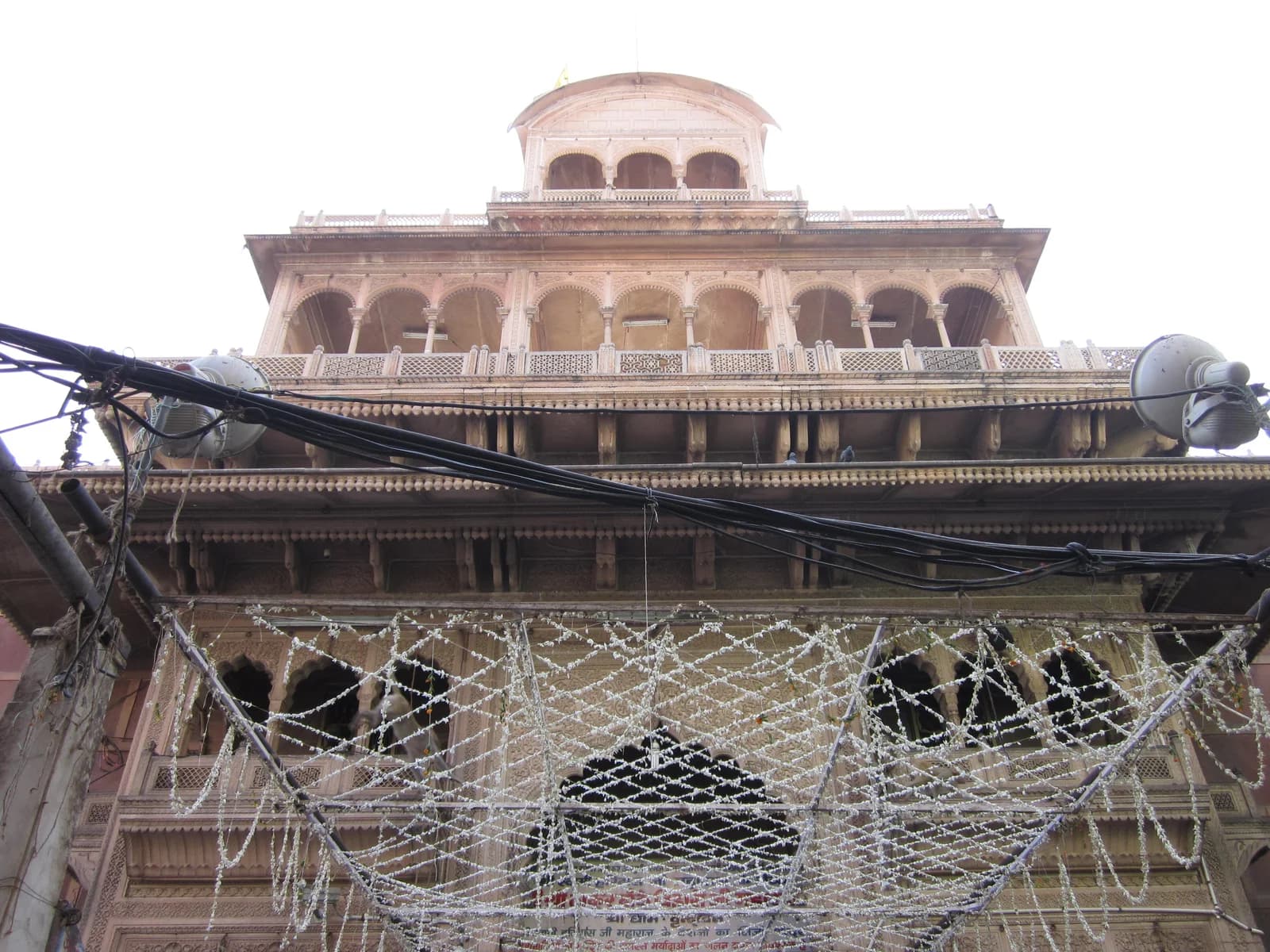
For a practical Mathura Vrindavan 2 days itinerary by train, arrive at Mathura Junction (MTJ) and go straight to Old Vrindavan on Day 1. Visit Shri Banke Bihari Temple, Shri Radha Vallabh Mandir and Shri Radha Madan Mohan Mandir, adding Keshi Ghat only if the riverside approach is open and you have energy left. On Day 2, travel to Mathura for Shri Krishna Janmabhoomi and Shri Dwarkadhish Temple, then return to MTJ for your train. If your priority is an evening at ISKCON and Prem Mandir instead, stay in Vrindavan on Day 2 and give the Mathura temples another trip. This route favours meaningful darshan over collecting names: allow for temple breaks, unpredictable queues and vehicle restrictions rather than planning every hour to the minute.
The two-day route at a glance
Day 1: VrindavanMathura Junction → Old Vrindavan → Banke Bihari → Radha Vallabh → Madan Mohan → optional Keshi GhatRoad transfer from MTJ, then largely on foot; pause during temple closuresDay 2: MathuraOld Vrindavan → Shri Krishna Janmabhoomi → Shri Dwarkadhish → optional Vishram Ghat → MTJRoad transfer to Mathura, short local transfers or walks, then railway stationAlternative Day 2ISKCON Krishna Balaram Mandir → Prem Mandir in the evening → MTJChoose this instead of a full Mathura circuit, preferably with a late departureThe sequence is a suggested visiting order, not a verified opening-hours timetable. Morning and evening access differs by temple and season. Your actual arrival time, return train and the day's crowd conditions determine which stops remain possible.
Arriving by train: Mathura Junction to Old Vrindavan
Book your train to Mathura Junction, station code MTJ, rather than assuming a long-distance train will serve Vrindavan's smaller railway facilities. The Banke Bihari Temple's visitor guidance identifies MTJ as the practical railhead, approximately 14 km from the temple, and lists local taxis, rickshaws and buses as transfer options. The distance is indicative; the route to your particular accommodation can differ.
Outside MTJ, arrange a taxi or auto-rickshaw to Vrindavan. A prearranged pickup can help a family with luggage, while travellers on a budget can ask about shared transport where available. Confirm the fare, luggage space and the actual drop-off point before departing. Do not rely on an advertised station-to-temple travel time: road traffic, festival controls and the final pedestrian approach vary.
Tell your driver you need the Old Vrindavan Banke Bihari area, not merely 'Vrindavan', which covers a much wider town. A car cannot be assumed to reach the temple or a guest-house doorway. Take only what you need for darshan, arrange secure luggage storage at your stay and ask for the nearest currently permitted drop-off. If your train arrives during the afternoon closure of a temple, check in and have lunch rather than rushing to a closed gate.
Day 1: Banke Bihari, Radha Vallabh, Madan Mohan and Keshi Ghat
1. Start with Shri Banke Bihari Temple
Make Banke Bihari the main commitment of your first day, not the final stop after several detours. The shrine is the devotional centre of this walking circuit, and crowd movement may affect every later plan. The temple's official darshan page confirms that entry is permitted during darshan sessions only, that timings change between summer and winter, and that there is no dedicated VIP darshan system. Check its current homepage before setting out.
Queues have no dependable fixed duration. On a busy day, it may be wiser to complete this one darshan peacefully and move Radha Vallabh to the evening than to push everyone through a rigid checklist. Keep your group together, follow stewarded routes and avoid arrangements offered by unofficial intermediaries. Weekends, holidays, Ekadashi, Poornima, Amavasya and major festivals are identified by the temple as particularly busy periods.
2. Walk to Shri Radha Vallabh Mandir
After Banke Bihari, continue towards Shri Radha Vallabh Mandir in the old temple quarter. It is a meaningful second darshan because the Radha Vallabh tradition places particular devotional emphasis on Shri Radha. The move keeps you within the older lanes instead of paying for another cross-town ride. Use the temple's own website for announcements, but confirm the day's actual darshan session locally; do not assume it shares Banke Bihari's hours.
3. Continue to Shri Radha Madan Mohan Mandir
Next aim for Shri Radha Madan Mohan Mandir, an important old Vrindavan shrine associated with Krishna devotion and distinctive Nagara-style architecture. The Mathura district administration describes it as standing above the Yamuna-side area near Kaliya Ghat. Its elevated setting can mean a more demanding approach than the flatter bazaar lanes, so consider the comfort and mobility of everyone in your group.
4. Add Keshi Ghat only if access and daylight permit
Keshi Ghat is a Yamuna-side setting associated in Krishna tradition with the defeat of the horse-demon Keshi. It provides a different experience from temple interiors: river views, ghats and the atmosphere of the older town. Attempt it after your main darshans if local access is open, the approach feels safe and your group is still comfortable walking. A gate, stretch of riverside path or particular activity may be restricted without much warning.
Use the temple break as a proper rest period
A common mistake in a Mathura Vrindavan trip plan by train is treating midday as uninterrupted sightseeing time. Several major temples have separate morning and evening darshan sessions. If your first darshan ends near a closure, make lunch, hydration and a room break part of the journey. In hot weather, this is especially valuable; in winter, the shorter daylight window may influence whether Keshi Ghat remains sensible.
Families with younger children and older devotees should choose two successful darshans over four exhausting attempts. Decide in advance which stop you will drop if the Banke Bihari queue consumes much of the session. For this route, keeping Banke Bihari and Radha Vallabh while making Madan Mohan or Keshi Ghat optional is a reasonable compromise.
Day 2: Shri Krishna Janmabhoomi and Dwarkadhish in Mathura
1. Travel to Shri Krishna Janmabhoomi first
After breakfast and checkout arrangements, use a taxi or auto-rickshaw from Vrindavan towards Shri Krishna Janmabhoomi (Shri Krishna Janmasthan) in Mathura. The site is revered as Lord Krishna's birthplace; the district tourism page describes its significance and confirms Mathura's rail connectivity. Starting here is useful because security screening and its own darshan window can create more uncertainty than a simple city-to-city drive.
Travel light. Restrictions on mobile phones, cameras, bags and other electronics are commonly reported for the Janmasthan complex; the exact permitted-item list, storage procedure and any charges must be confirmed through current temple or local official instructions. Do not leave valuables unattended or assume that a particular locker facility will be operating. Allow additional time for checking belongings and security, without assigning invented minutes to the queue.
2. Continue to Shri Dwarkadhish Temple
From Janmabhoomi, go to Shri Dwarkadhish Mandir in Mathura's older market area, using a local auto-rickshaw as far as currently allowed and walking the remaining lanes. The district administration identifies it as one of Mathura's principal Krishna shrines. It is a strong second stop because it keeps Day 2 focused on Mathura rather than sending you backwards and forwards across the two towns.
3. Return directly to MTJ
After Dwarkadhish, head to Mathura Junction rather than returning to Vrindavan unless you have left luggage at your accommodation. Check your train's platform and live status through your railway booking channel. Build a generous, flexible station buffer that covers local transport, traffic and security checks. There is no dependable promise of how long temple lines will take, so the departure time—not the number of sights on your wish list—must decide when you leave.
Alternative Day 2: ISKCON and Prem Mandir in the evening
If your return train is late and you would rather remain in Vrindavan, substitute the Mathura circuit with ISKCON Krishna Balaram Mandir and Prem Mandir. They are outside the tight Banke Bihari walking cluster, so plan road transport rather than assuming an easy stroll from Old Vrindavan. Visit ISKCON during a suitable open darshan session, then proceed to Prem Mandir for its evening atmosphere if access and your departure schedule allow. Evening illuminations are an attraction, but their current operation and timing should be confirmed rather than guaranteed.
Choose one clear priority: Mathura's Janmabhoomi and Dwarkadhish if birthplace heritage matters most; ISKCON and Prem Mandir if you want a more relaxed Vrindavan-focused second day. Attempting both full circuits and a same-day train departure is risky, particularly on a weekend. A very late departure may leave room for a brief extra visit, but do not make it the core promise of your plan.
What does not comfortably fit into two days?
Govardhan, Radha Kund, Barsana, Nandgaon and Gokul are significant Braj destinations, but they should not be appended casually to this two-day train itinerary. They involve separate road journeys and deserve their own visiting time. A full Vrindavan parikrama also changes the physical demands and would replace, rather than supplement, part of Day 1. Adding these stops can mean missing the very darshans you travelled for.
If you arrive at MTJ late on Day 1, reduce the plan to Banke Bihari plus one nearby temple or evening visit, subject to opening hours. If your Day 2 train leaves early, prioritise Janmabhoomi or Dwarkadhish, not both. Travellers arriving on a festival weekend should be prepared for even stronger cuts: temple authorities may advise vulnerable visitors to avoid peak-day crowds altogether.
Where to stay for a walkable Old Vrindavan visit
ZenithSuites Vrindavan, on Gali No. 5 (VIP Gali), Madan Mohan Banke Bihari Path, is one Old Vrindavan option near the temple. Its site reports approximately 120 metres of direct proximity to Banke Bihari, which is not a verified walking-route length. The property has no on-site parking and describes paid off-site parking nearby; confirm the live drop-off arrangement before travel. Staying anywhere in this quarter can make a midday return easier, but no accommodation bypasses temple queues or access rules.
Before you leave: what to verify
- Banke Bihari: Check official seasonal darshan information, festival updates and crowd advice. Its website specifically cautions older people, pregnant visitors and families with small children about peak days.
- Other temples: Confirm Radha Vallabh, Madan Mohan, Janmasthan, Dwarkadhish, ISKCON and Prem Mandir sessions individually; one temple's opening time does not establish another's.
- Local access: Ask your accommodation or driver about current diversions, suitable drop-off points, and any restricted lanes. Fees, if any, for parking or services remain unconfirmed until checked locally.
- Train departure: Plan around the actual MTJ boarding time, keeping both the road transfer and unpredictable darshan queues in mind.
Frequently asked questions
Can Mathura and Vrindavan both be covered in two days by train?
Yes, for a selective pilgrimage: Day 1 in Old Vrindavan and Day 2 at Janmabhoomi and Dwarkadhish in Mathura. It is not enough for every major Braj temple, a full parikrama and distant excursions.
Should I stay near Mathura Junction or Banke Bihari Temple?
Stay in Old Vrindavan when walkable first-day darshan and returning to your room are priorities. Stay closer to MTJ if you have a very early departure, substantial luggage or an itinerary weighted towards Mathura. Confirm the actual last-mile journey for either choice.
Can I do Prem Mandir after the Mathura temples?
Possibly, if both Mathura darshans finish in time, evening access is available and your train is sufficiently late. For a dependable two-day plan, treat Prem Mandir as an alternative Day 2 focus, not an obligatory extra stop.
ZenithSuites
The ZenithSuites Vrindavan Editorial Team creates practical, respectful guides for temple visits, family pilgrimage and stays in the sacred lanes of old Vrindavan. Current temple and civic guidance should always be checked close to travel.
Plan Your Vrindavan Stay Near Shri Banke Bihari Temple
Compare Standard, Deluxe, Suite and Family Suite rooms approximately 120 metres in direct proximity from Shri Banke Bihari Temple, with transparent arrival and parking guidance.
Compare Vrindavan Rooms