
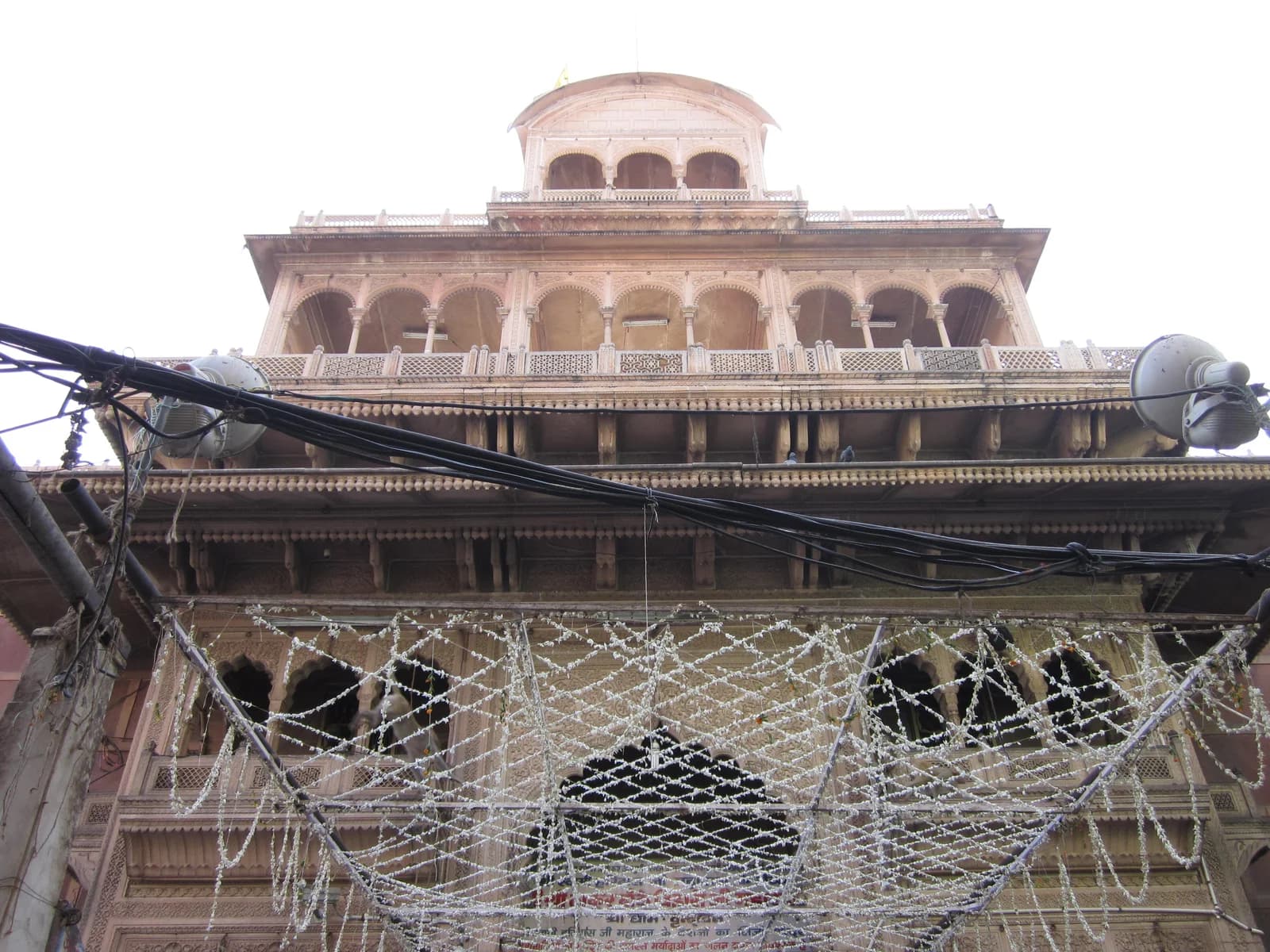
Yes, you can visit Mathura, Vrindavan and Agra in three days without rushing, provided you divide the trip sensibly. Spend Day 1 exploring Old Vrindavan, including Shri Banke Bihari Temple, Radha Vallabh Temple and Keshi Ghat. Use Day 2 for Shri Krishna Janmabhoomi in Mathura, ISKCON Vrindavan and Prem Mandir. Reserve Day 3 for the Taj Mahal and Agra Fort. This gives you two days for Krishna pilgrimage and one for Agra's Mughal monuments.
The most important scheduling rule is that the Taj Mahal is closed to regular visitors on Fridays. Temple darshan schedules also vary by season and occasion. Plan around these restrictions first, then arrange your transport and accommodation. Three full sightseeing days work considerably better than a trip where arrival and departure consume much of the first and last days.
Mathura Vrindavan Agra 3-Day Itinerary at a Glance
Day 1Banke Bihari Temple, Radha Vallabh Temple, Madan Mohan Temple, Keshi GhatWalking within Old VrindavanDarshan and Old VrindavanDay 2Shri Krishna Janmabhoomi, ISKCON, Prem MandirTaxi or local road transportMathura pilgrimage and Vrindavan templesDay 3Taj Mahal, Agra Fort, optional Mehtab Bagh or Itimad-ud-DaulahCar or train with local transfersAgra monumentsFor the temple portion, staying in Vrindavan avoids unnecessary daily commuting. Travellers arriving from Delhi can reach Vrindavan by road or use Mathura Junction as their railway gateway. Agra can be the final destination before returning towards Delhi or continuing onward by train.
Day 1: A Full Day Exploring Old Vrindavan
Begin with Shri Banke Bihari Temple
Start with Shri Banke Bihari Mandir, one of Vrindavan's most important pilgrimage destinations. Rather than attempting several distant temples immediately, keep the first darshan as your main priority. Morning visits can be practical, but actual admission depends on the temple's scheduled darshan sessions.
The official Banke Bihari darshan information confirms that timings differ between summer and winter, with changes also possible during festivals and special occasions. Weekends, Ekadashi, Poornima and major festivals can bring substantial crowds. Queue duration cannot be calculated reliably from walking distance alone.
Private vehicles cannot be taken directly to Banke Bihari Temple. Visitors generally need to use an appropriate parking or drop-off location and complete the permitted approach on foot. Check the latest access guidance rather than assuming a car can reach the temple entrance.
Continue through the historic temple lanes
After Banke Bihari, consider Shri Radha Vallabh Temple and Shri Madan Mohan Temple. Both offer a different perspective on Vrindavan's devotional heritage. Their visiting sessions may not align perfectly, so choose the order according to actual opening arrangements and available pedestrian routes.
Spend the afternoon resting, eating or exploring a manageable part of the old town. Later, consider Keshi Ghat on the Yamuna. Its riverfront surroundings offer a contrast to the busy temple lanes. Nidhivan or Seva Kunj can be alternative additions, subject to their current visitor access rules.
A useful feature of staying in Old Vrindavan is the opportunity to rest between darshan sessions. ZenithSuites Vrindavan, located near Banke Bihari Temple, offers a temple-quarter base for visitors who prefer to walk out for darshan and return to their room between visits. The property does not have on-site parking; it describes paid off-site parking and recommends confirming drop-off arrangements before arrival. Nearby geographic proximity does not guarantee an equally short walking route during crowd diversions.
Practical decision: Prioritise Banke Bihari and two or three other Old Vrindavan locations. Families with small children and elderly pilgrims should reduce optional stops if queues are long. A relaxed day in Old Vrindavan is generally more rewarding than repeated transfers to distant temples.
Day 2: Mathura Janmabhoomi, ISKCON and Prem Mandir
Morning: Shri Krishna Janmabhoomi, Mathura
Begin by travelling from Vrindavan to Mathura. The two cities are roughly 12–15 kilometres apart, depending on the locations measured. Allow approximately 30–60 minutes for a road journey as a broad planning estimate, with additional time possible during congestion.
Visit Shri Krishna Janmabhoomi, also called Shri Krishna Janmasthan, the sacred complex associated with Lord Krishna's birthplace. The Mathura district administration provides background on its religious significance.
Allow time for queues and security screening. Rules concerning mobile phones, cameras, bags and other belongings should be confirmed before arriving; do not assume everything can be carried inside. If your visit finishes comfortably, you can consider Vishram Ghat, but treat it as optional rather than jeopardising the afternoon.
Afternoon: ISKCON Krishna Balaram Mandir
Return towards Vrindavan for Sri Sri Krishna Balaram Mandir, commonly known as ISKCON Vrindavan, in the Raman Reti area. This is a separate road transfer from Mathura, not a continuous walking route from Janmabhoomi.
The temple is particularly meaningful for visitors interested in the International Society for Krishna Consciousness and its worship traditions. Check current programmes and visitor sessions through the official ISKCON Vrindavan website, because a midday or afternoon closure can affect your sequence.
If Mathura takes longer than expected, spend less time at ISKCON or choose between ISKCON and Prem Mandir. Avoid forcing both visits into an unsuitable time window.
Evening: Prem Mandir
Finish with Prem Mandir, known for its elaborate marble architecture, gardens and decorative illumination. A later visit is popular among travellers wishing to see the illuminated exterior, but lighting schedules, entry arrangements and closing times should be confirmed for the travel date.
This Mathura–ISKCON–Prem Mandir combination is feasible when Janmabhoomi remains your principal Mathura destination. Adding Govardhan, Barsana, Nandgaon or Gokul would require substantial extra travel and should be left for another day or a longer Braj pilgrimage.
Practical decision: Keep the Mathura programme selective, arrange transport between the cities and protect enough time for Prem Mandir. If travelling with seniors, consider leaving one of the afternoon temples optional.
Day 3: Taj Mahal and Agra Fort Without a Half-Day Rush
Getting from Vrindavan or Mathura to Agra
Agra is approximately 65–80 kilometres by road from the Vrindavan area, depending on the route and starting point. A broad allowance of 1.5–2.5 hours is sensible for the drive, although congestion, diversions and the final approach can add time. From Mathura, the journey is shorter, at roughly 55–65 kilometres by road.
These estimates cover travel, not monument entry, queues or sightseeing. This is why attempting both Agra monuments and multiple Vrindavan darshans in one half-day is usually unrealistic.
If you stay in Vrindavan for both nights, leave early and accept a morning arrival in Agra rather than expecting to reach the Taj Mahal precisely at sunrise. Travellers who particularly want sunrise photographs should consider staying in Agra the previous night, although that requires adjusting the Day 2 evening programme.
First stop: The Taj Mahal
The Taj Mahal should be the first major monument of the day. Official visitor information states that normal visiting hours begin 30 minutes before sunrise and end 30 minutes before sunset. The Taj Mahal is closed to ordinary tourists every Friday.
Allow approximately two to three hours for sightseeing as a suggested planning window, potentially longer during crowded periods. The complex includes the marble mausoleum, gardens and surrounding architectural features. Security screening and the distance between permitted vehicle drop-off areas and entry gates require additional allowance.
Ticket prices, applicable ticket categories, online booking arrangements and entry restrictions should be checked using the official Taj Mahal visitor FAQ and Archaeological Survey of India information before departure. Do not rely on previously published ticket amounts.
Second stop: Agra Fort
After the Taj Mahal, take a meal break before visiting Agra Fort. The historic red-sandstone fort contains impressive gateways, courtyards and palatial structures associated with the Mughal emperors.
Plan roughly 90 minutes to two hours for an ordinary sightseeing visit, depending on mobility and interest. The Agra district administration identifies Agra Fort as open on Fridays, making it an option when the Taj Mahal is closed, subject to any exceptional restrictions.
One optional monument, not three
If time remains, choose between Itimad-ud-Daulah's Tomb, sometimes called the Baby Taj, and Mehtab Bagh, across the Yamuna from the Taj Mahal. These are separate locations requiring further transport.
Fatehpur Sikri is another major Mughal destination, but it lies outside central Agra and needs significantly more time. It is better reserved for a separate excursion or used as a substitute for part of the Agra programme rather than squeezed into this itinerary.
What if Day 3 falls on Friday?
Rearrange your three days so that the Taj Mahal visit falls on another day. If your schedule cannot change, visit Agra Fort and another operating monument. An authorised external viewpoint near Mehtab Bagh may offer a view of the Taj Mahal without entering its complex. The government's Taj viewpoint information discusses Friday viewing, but current access and tickets should be confirmed separately.
Delhi, Mathura, Vrindavan and Agra: Best Travel Routes
For a Delhi Agra Mathura Vrindavan tour, the route should follow your arrival point, departure point and the Taj Mahal's closure day. A practical road sequence is Delhi to Vrindavan, Vrindavan to Mathura and back, then Vrindavan to Agra. You can finish in Agra or return towards Delhi.
Alternatively, visit Agra first if that better suits the non-Friday Taj schedule, then continue towards Mathura and Vrindavan. Road travellers can use the major Delhi–Agra highway corridor or suitable expressway connections, but should confirm current route access and journey estimates before departure.
Arriving and returning by train
Mathura Junction (MTJ) is the principal practical railway gateway for most Vrindavan visitors. From there, arrange a taxi or other available transport to Vrindavan, then follow the permitted final approach to your accommodation.
For Agra, compare a direct car journey against travelling from Mathura Junction to Agra Cantt (AGC) by train. The railway option adds local transfers at both ends, so it is not automatically quicker door to door.
For your return, search trains from Agra Cantt towards New Delhi or Hazrat Nizamuddin if finishing in Agra. Travellers ending in Vrindavan should generally compare services departing Mathura Junction. Confirm actual stations, running days, train times and seat availability through IRCTC or official railway enquiry. Do not book a tight connection based only on an estimated temple-to-station journey.
What If You Have Only Two Days?
Option 1: Prioritise pilgrimage. Spend Day 1 exploring Banke Bihari Temple and Old Vrindavan. Spend Day 2 at Shri Krishna Janmabhoomi, ISKCON and Prem Mandir. Skip Agra. This is the better option for visitors whose primary purpose is Krishna darshan and who want to avoid excessive driving.
Option 2: Include the Taj Mahal. Use Day 1 for Banke Bihari and one or two nearby shrines, then Day 2 for the Taj Mahal and Agra Fort. This sacrifices most of Mathura and the wider Vrindavan circuit, but gives Agra adequate time. Ensure the second day is not Friday.
If travelling from Delhi within those same two days, account for both the outward and return journeys. A late departure from Delhi can significantly reduce available sightseeing time.
Practical Checks Before You Travel
- Temple schedules: Check the official Banke Bihari darshan calendar and confirm current sessions at other temples.
- Taj Mahal: Avoid Friday for standard entry and verify current ticketing, security and gate instructions.
- Transport: Budget separately for road travel, vehicle restrictions, walking, queues and station transfers.
- Families and seniors: Allow rest periods, avoid peak festival crowds where possible and confirm individual-site accessibility arrangements.
- Accommodation: Choose your base according to whether Old Vrindavan walkability or Agra sunrise access matters more.
The best Mathura Vrindavan Agra three-day itinerary is not the one with the greatest number of stops. It is the one that protects a full day for Old Vrindavan, combines Mathura and the larger Vrindavan temples selectively, and gives the Taj Mahal and Agra Fort a separate day. With sensible travel arrangements and verified entry schedules, you can experience both Braj's spiritual heritage and Agra's Mughal architecture without turning the journey into a race.
ZenithSuites
The ZenithSuites Vrindavan Editorial Team creates practical, respectful guides for temple visits, family pilgrimage and stays in the sacred lanes of old Vrindavan. Current temple and civic guidance should always be checked close to travel.
Plan Your Vrindavan Stay Near Shri Banke Bihari Temple
Compare Standard, Deluxe, Suite and Family Suite rooms approximately 120 metres in direct proximity from Shri Banke Bihari Temple, with transparent arrival and parking guidance.
Compare Vrindavan Rooms