
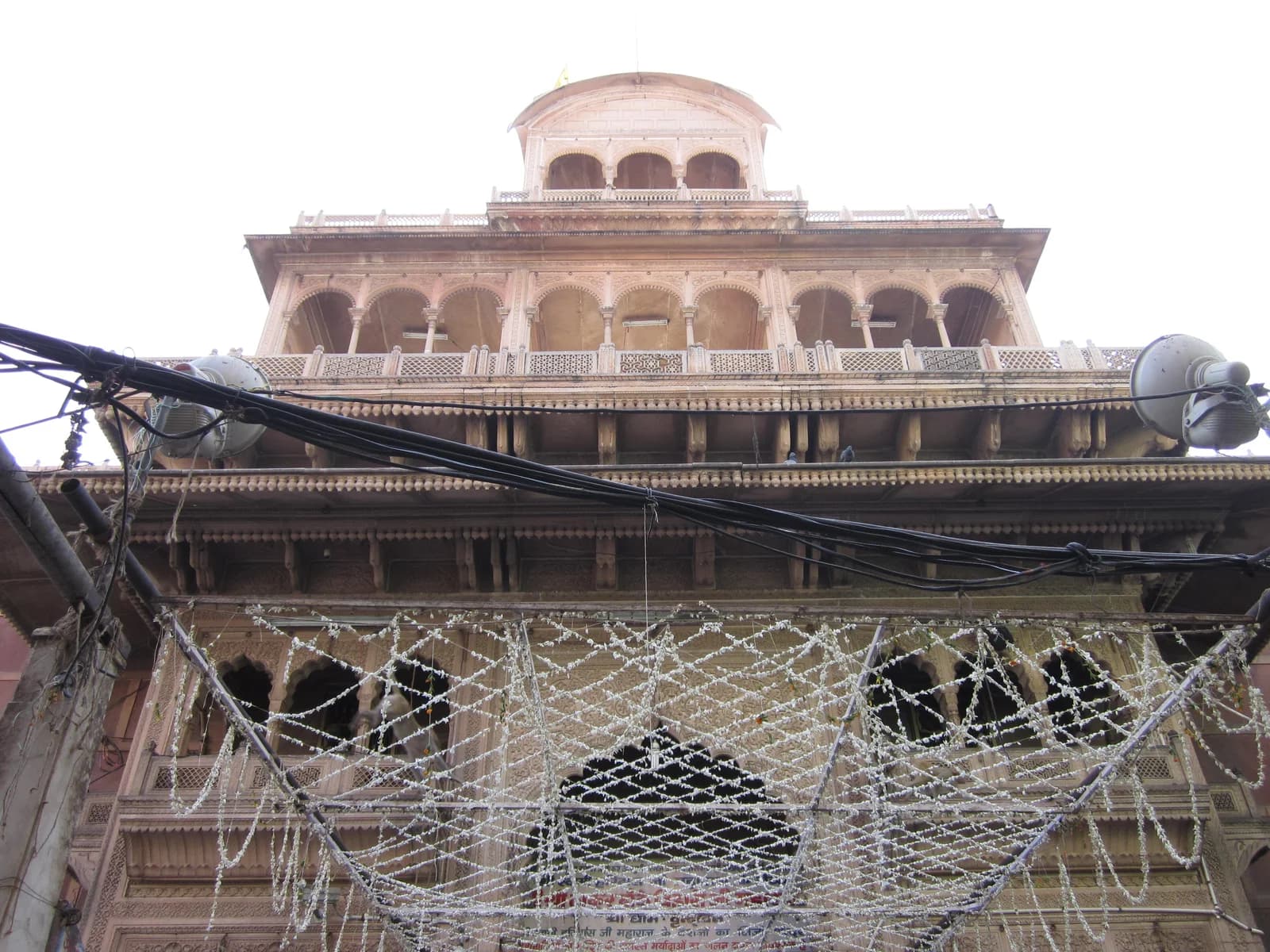
Phoolon Ki Holi at Shri Banke Bihari Temple in Vrindavan is commonly associated with Rangbharni (Aamla) Ekadashi, Thursday, 18 March 2027. The temple's official festival calendar confirms that date as the beginning of its colourful Holi celebrations, but it does not establish a separate flower-petal ceremony or an exact Banke Bihari Holi timing for petals. If seeing flower Holi is your main reason to travel, treat 18 March as the key date to monitor, not a guaranteed performance slot. The venue is Shri Banke Bihari Mandir in the narrow lanes of Old Vrindavan, Uttar Pradesh. Arrange your approach on foot, expect managed queues and possible diversions, and check the temple's latest notice before finalising non-refundable travel.
Phoolon Ki Holi Vrindavan 2027: which dates are confirmed?
Several online Holi calendars combine celebrations from different Braj towns, which can make one event appear on multiple dates. The Banke Bihari temple calendar gives firmer reference points for its own observances:
Rangbharni / Aamla EkadashiThursday, 18 MarchThe official temple calendar marks the start of colourful Holi celebrations; a specific flower-shower slot is unconfirmed.Holika DahanSunday, 21 MarchThe temple calendar marks the end of the preceding colourful Holi period.Rangwali Holi / DhulendiMonday, 22 MarchThe main colour-playing day; the temple separately lists Dhulendi and Dolotsav.Dedicated Phoolon Ki Holi programmeNot separately confirmedWait for a specific temple announcement before relying on a petal shower, entry window or start time.These dates refer to different observances, not three names for one event. Rangbharni Ekadashi is the festival milestone that begins the temple's Holi period. Phoolon Ki Holi describes a flower-centred celebration that travellers hope to experience. Rangwali Holi is the later day of colour play across Vrindavan. A listing that says only 'Holi on 22 March' does not answer when to visit for flowers.
What actually happens at Banke Bihari during Holi?
Shri Banke Bihari Mandir's Aamla Ekadashi description explains that full-scale celebrations begin on Ekadashi evening and continue towards Holika Dahan. It describes Thakurji dressed in white, Holi songs in the courtyard, fragrant preparations, dry colours and water coloured with boiled tesu flowers. The devotional atmosphere may extend beyond the temple into the surrounding streets.
That description matters because flower-derived colour is not the same as a verified shower of loose flower petals. Visitors searching for 'flower holi Vrindavan' often imagine petals falling over a gathering. Such photographs and videos may represent particular moments, different venues or previous years. Do not assume the same ritual, duration, viewpoint or crowd arrangement will be available in 2027 without confirmation from the temple.
Banke Bihari Holi timing, entry and queues
No exact 2027 time for a separate Phoolon Ki Holi petal shower has been verified. The temple publishes seasonal darshan hours, but its darshan guidance explains that festival arrangements can alter timings and that entry is permitted only during the applicable darshan window. A regular opening time should never be presented as the confirmed start of flower Holi.
Check the official notice again shortly before leaving and on the morning of your visit. Determine whether the announcement names a festival programme, a changed entry gate, a limited darshan session or a different closure. No special Phoolon Ki Holi entry fee or reservation arrangement is confirmed here. Avoid paying an unofficial seller for a supposedly guaranteed flower shower or priority queue.
The temple states that it does not offer a dedicated VIP darshan system. Queue duration is not a journey-time estimate: a short walk to the temple can still end in a long controlled approach, and police may temporarily hold movement. Do not plan your return train or car departure around an assumed 15-minute darshan. Allow room for a missed window and be willing to leave without entering if officials stop admissions.
Reaching the temple through Old Vrindavan's tight lanes
Shri Banke Bihari Temple is in Old Vrindavan, where the final approach runs through compact market and residential lanes. During major festivals, pedestrian entry points and exit routes may change at short notice. Treat a navigation app's shortest line as a map suggestion, not permission to use that lane. Follow posted signs, police instructions and the direction of the managed crowd, even when they lead away from the temple before turning back.
Arriving from Mathura Junction, take suitable local transport towards Vrindavan and confirm where it can currently drop passengers. Visitors coming by car from Delhi, Noida or Agra should identify an authorised parking option outside the restricted temple area and be prepared for an onward walk or permitted local transfer. There is no verified 2027 festival-day parking location, charge or vehicle access entitlement that can safely be promised in advance.
Save the address of your accommodation and a workable meeting point outside the busiest lane. A helpful meeting point is somewhere your group can identify from both directions, not a fixed temple gate that may be barricaded. Agree that separated companions should not force their way against a one-way queue. Mobile network congestion can complicate calls, so establish your plan before entering.
A practical one-night Old Vrindavan itinerary
17 March: arrive before the festival day if practical
For visitors travelling mainly for the anticipated 18 March observance, an overnight arrival on Wednesday, 17 March gives more flexibility than a same-day drive. Reach Vrindavan, settle in, verify the latest temple announcement and ask locally about the permitted pedestrian approach. Use the remaining time for a gentle visit to a nearby Old Vrindavan shrine, such as Shri Radha Vallabh Temple or Shri Radha Madan Mohan Mandir, only if its own visiting hours and route make sense. Keep the evening free rather than arranging a tight multi-temple schedule.
18 March: make Banke Bihari the main objective
Check again whether the temple has specifically announced flower Holi and when the permitted approach begins. Set out with light essentials according to current security rules, leave unnecessary belongings at your accommodation and approach on foot from the authorised side. If there is a managed wait, decide early whether everyone in your group is comfortable remaining in it. Watch for temporary diversions and follow staff guidance rather than trying to reach the front through side lanes.
After darshan, leave through the directed exit, rest, eat and recover before deciding on another outing. The nearby Shri Radha Vallabh Temple or Madan Mohan Temple can be meaningful alternatives if accessible; their own schedules are separate from Banke Bihari's. Nidhivan and Keshi Ghat are further options for another unhurried walk, not compulsory stops to squeeze between queue sessions. If you want Prem Mandir or ISKCON Vrindavan, plan a separate road transfer and expect additional traffic restrictions.
For an Old Vrindavan base, ZenithSuites Vrindavan is in Gali No. 5 (VIP Gali), Madan Mohan Banke Bihari Path, near the main temple. Staying within the temple quarter may reduce repeated e-rickshaw or car transfers and make it easier to return to your room between outings. It does not bypass queues, guarantee a short pedestrian route or allow a vehicle to reach the entrance. The property has no on-site parking and describes paid off-site parking nearby; confirm the current drop-off and walking approach directly before travelling.
19 March: keep a flexible departure
After an overnight festival visit, reserve time for breakfast and a calm departure rather than booking the earliest possible connection. If you missed the desired event, check whether ordinary darshan is feasible on the next day; do not assume flower Holi will be repeated. Travellers whose goal is the wider Braj Holi experience can add separate days, but travel to Barsana, Nandgaon or Mathura requires its own route and schedule verification.
Crowd decisions for families, seniors and first-time visitors
The temple explicitly warns that annual festivals and Ekadashi attract particularly heavy crowds. Its guidance advises elderly devotees, pregnant visitors, people with disabilities and families with infants or young children to avoid peak days. That is an important trade-off: being physically close to the temple does not make the queue safe or easy for someone who finds prolonged standing or dense crowds difficult.
If travelling with parents or small children, decide in advance whether experiencing the festival is worth the uncertainty. A quieter date, a shorter nearby-shrine circuit or resting at the accommodation may be a better choice than entering a packed approach. The temple has an assistance-request process for certain visitors, but assistance is capacity-limited, requires confirmation and may not be accommodated on peak days. It should never be treated as guaranteed festival access.
Respectful participation and personal safety
Flower Holi is a devotional occasion, not an invitation to throw petals, colour or water at anyone without consent. Follow the temple's instructions about where participation is permitted. Do not push for photographs, block a doorway or interfere with worshippers and sewa activities. If colours are circulating in nearby streets, expect your clothes and shoes to be affected and choose practical, modest clothing that you do not mind washing.
The temple's published do's and don'ts instruct devotees to follow the queue, maintain decorum, beware of pickpockets and monkeys, and avoid bringing phones, electronic gadgets, umbrellas, footwear and leather items into the shrine precinct. Check current enforcement and any designated deposit arrangements instead of assuming an item will be allowed because another visitor has it. Carry no more valuables than necessary and do not hand belongings to an unknown person promising special entry.
If the flower ceremony is not confirmed, should you still go?
Choose according to your reason for visiting. For a guaranteed petal-shower experience, wait for the temple's specific announcement before committing. For Banke Bihari darshan and the wider Holi atmosphere, 18 March remains a meaningful date because the official festival calendar identifies Aamla Ekadashi as the start of celebrations. For more conventional colour-playing, 22 March is the separate Dhulendi date on that same calendar.
Frequently asked questions
Is Banke Bihari Phoolon Ki Holi on 18 March 2027?
Thursday, 18 March 2027 is the temple-confirmed Aamla Ekadashi date and start of its colourful Holi celebrations. It is the relevant date to investigate for Phoolon Ki Holi, but the temple's accessible festival information does not separately confirm a petal-shower time or programme.
What time should I reach Banke Bihari for flower Holi?
No precise flower Holi start time has been confirmed for 2027. First check the official event notice and darshan information, then allow extra time for access checks and queues. Reaching the area early does not guarantee admission or a view of any particular ritual.
Can I drive directly to Banke Bihari Temple or park at a nearby guest house?
Do not assume either. Festival diversions can restrict vehicle access and change pedestrian approaches. Choose a permitted drop-off or off-site parking arrangement after checking local instructions. ZenithSuites has no on-site parking; paid parking is described as off-site, with current availability and access to be confirmed.
Bottom line: For Phoolon Ki Holi at Banke Bihari in 2027, monitor 18 March, verify the specific flower event and timing directly with temple notices, and treat crowd management as part of the visit. Old Vrindavan is best explored with flexible walking plans, patience for darshan and a realistic option to change course.
ZenithSuites
The ZenithSuites Vrindavan Editorial Team creates practical, respectful guides for temple visits, family pilgrimage and stays in the sacred lanes of old Vrindavan. Current temple and civic guidance should always be checked close to travel.
Plan Your Vrindavan Stay Near Shri Banke Bihari Temple
Compare Standard, Deluxe, Suite and Family Suite rooms approximately 120 metres in direct proximity from Shri Banke Bihari Temple, with transparent arrival and parking guidance.
Compare Vrindavan Rooms