
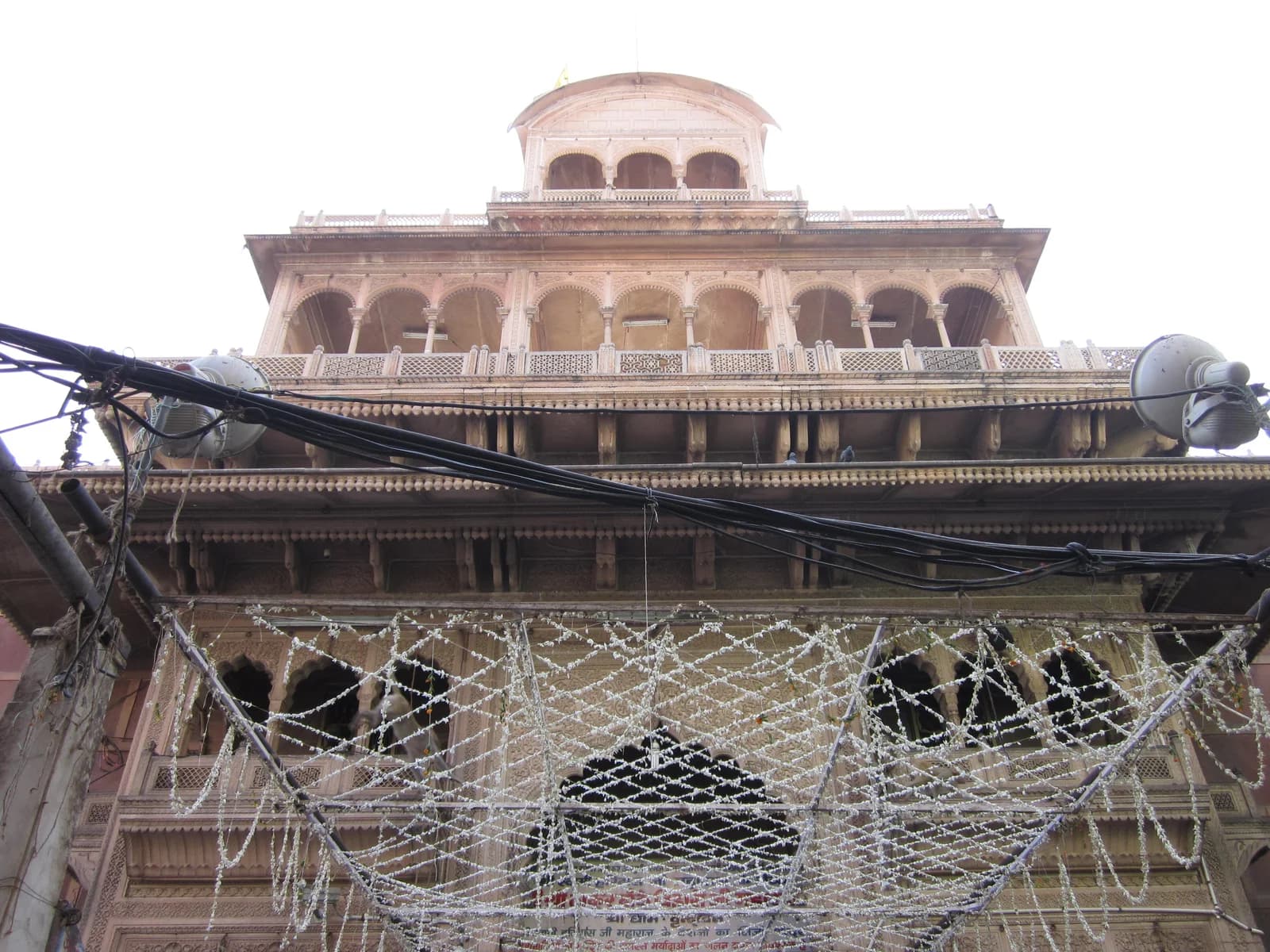
Radha Damodar Mandir in Vrindavan is best visited in the morning, before its commonly reported midday closure, or after the afternoon reopening. Independent temple guides commonly list darshan from 4:30 am to 1:00 pm and 4:30 pm to 9:00 pm, implying a break from 1:00 pm to 4:30 pm. However, these exact opening, closing and break times could not be confirmed from the temple's own published schedule, so treat them as indicative, not guaranteed. Its darshan page lists individual aartis but not a clearly stated midday closure. For a walk covering Radha Damodar, Seva Kunj, Radha Raman and Nidhivan, begin with whichever temple has the earliest confirmed accessible darshan, and keep the groves for daylight.
Radha Damodar Temple timings and midday closure
These details distinguish the temple website from independent listings.
Mangala aarti4:30 am on the temple darshan pageConfirm any early-morning entry arrangements directlyDhoop aarti7:30 am on the darshan pageListed time, not an entry guaranteeRajbhog aarti11:45 am on the darshan page; homepage says 12:00 pm for Rajbhog darshanPublished pages differ: verify locallySandhya aarti7:00 pm on the darshan pageCheck for seasonal or festival changesGeneral darshan windowsOften reported as 4:30 am–1:00 pm and 4:30–9:00 pm by outside guidesIndicative only; midday closure not independently confirmed with the templeThe website footer also says “Daily: 4:00 AM - 9:00 PM”, which should not be interpreted as continuous darshan. Verify the last morning entry, reopening and desired aarti with temple staff. Avoid arriving close to the reported 1:00 pm closure. Festival arrangements can differ.
How Radha Damodar differs from Radha Raman timings
Radha Raman Mandir is a separate temple with its own seva routine, not an extension of Radha Damodar's schedule. Visitor listings frequently describe a morning session ending around 12:30 pm and a later evening reopening, but they disagree over the starting and finishing hours. The Sri Radha Raman Sewa Charitable Trust website does not clearly publish a verified, current daily opening-and-closing table. Therefore neither the reported 1:00 pm Radha Damodar closing nor its reported 4:30 pm reopening should be applied to Radha Raman.
If both shrines are essential, prioritise their morning darshans before exploring the groves. Verify access separately at each gate rather than walking between closed entrances during the midday break.
Walking route: Radha Damodar to Seva Kunj, Radha Raman and Nidhivan
These sites form a walkable cluster, but winding lanes and crowd barriers can change the route. Use landmarks instead of unverified walking distances.
- Start at Shri Radha Damodar Mandir, Seva Kunj area. From the Banke Bihari side, head towards Seva Kunj Road and ask for “Radha Damodar Ji Mandir”. Confirm the entrance locally; complete darshan before exploring the courtyard.
- Continue to Seva Kunj. Follow the Seva Kunj-side lane to the separate walled grove. Check which entrance is admitting visitors.
- Proceed to Shri Radha Raman Mandir. From the Seva Kunj or Radha Vallabh-side lanes, ask for “Radha Raman Lal Ji”. The shrine lies towards Nidhivan; confirm its darshan status before proceeding.
- Finish at Nidhivan. Ask for Nidhivan Road and the current visitor entrance. Shahji Temple is another area landmark, not Radha Raman Mandir. Visit during daylight.
Reverse the circuit if entering from Nidhivan. For a shorter family visit, choose Radha Damodar and Seva Kunj first, adding other stops only if energy and access allow.
What makes Radha Damodar worth visiting?
Radha Damodar is one of Vrindavan's historic seven Goswami temples. The Mathura district administration dates its establishment by Jiva Goswami to 1542 CE in the Seva Kunj area. Its significance is both devotional and historical: worship of Radha and Krishna in the form of Damodar, association with the early Gaudiya Vaishnava teachers, and memorial spaces connected with their work in Vrindavan.
The compound is associated with the samadhis of Rupa Goswami and Jiva Goswami. Devotees also revere a Govardhan shila linked by tradition to Sanatana Goswami. The belief that four circumambulations here confer the spiritual benefit of Govardhan parikrama is a religious tradition, not a substitute for the physical Govardhan route or a rule every visitor must follow. Ask attendants which parikrama passage is currently open, and avoid interrupting prayers or walking into private seva areas.
For followers of A. C. Bhaktivedanta Swami Prabhupada, the temple has another connection: he stayed and worked in rooms here before departing for the West in the 1960s. Access to those rooms may vary; this remains a working shrine.
Seva Kunj and Nidhivan: two distinct sacred groves
Seva Kunj and Nidhivan are not interchangeable names. Both are deeply associated in Vrindavan's devotional traditions with Radha and Krishna's divine pastimes, yet they have separate entrances and may operate different visiting arrangements. Nidhivan is especially associated with Swami Haridas and the devotional history of Banke Bihari. The groves are places of living reverence, not venues for trying to observe private nighttime rituals.
Neither grove’s present gate hours were confirmed directly. Public guides describe daytime visiting and closure around sunset, but no exact time is verified here. Respect locked gates and avoid anyone promising after-hours access.
Arrival, crowds, photography and visitor comfort
Walk the last stretch. From Mathura or the outer Vrindavan roads, use an authorised local vehicle only as far as the permitted drop point, then continue through the old lanes. Do not assume a car can reach Radha Damodar, Seva Kunj or the entrance to your accommodation. Traffic controls and pedestrian routing can change around Banke Bihari and on festival days. Confirm any parking arrangement at the time of travel; a guaranteed nearby space or fixed fee has not been verified.
Crowds can increase during Kartik, weekends and Vaishnava festivals. Allow for temporary one-way routes, and distinguish waiting at temple gates from walking time. Visitors with mobility limitations should ask about step access and current route conditions: narrow lanes, uneven surfaces and standing queues can make the circuit difficult, and step-free access has not been verified for these sites.
Photography requires consent and local compliance. Do not assume that a permitted courtyard photo means deity images, samadhis, personal prayers or grove interiors may be photographed. Follow notices and instructions from sevaits or caretakers, avoid flash, and put the phone away wherever photography is restricted. Ask before photographing worshippers. Keep valuables secure and be alert to monkeys around exposed glasses, food and phones.
A sensible morning plan and where to take a break
Begin with your priority shrine: Radha Damodar for Goswami history and parikrama, or Radha Raman for its own morning darshan. Visit the second temple before the midday break, then the groves if open. Confirm with caretakers before returning later.
Visitors staying near Banke Bihari Temple can split the circuit between morning and evening instead of remaining on their feet through the afternoon. ZenithSuites Vrindavan, in Old Vrindavan's Banke Bihari area, is one possible base for returning to the room between darshan visits; actual walking paths can change with barriers and crowds. The guest house has no on-site parking, so arrange vehicle drop-off or paid off-site parking separately.
Quick visitor questions
Is Radha Damodar Mandir open throughout the afternoon?
Do not count on it. Outside listings commonly show a 1:00–4:30 pm break, but a current midday closure was not explicitly confirmed on the temple's own schedule. Ask at the temple before planning an afternoon-only visit.
Can Radha Damodar and Radha Raman be visited together?
Yes, they are in the same Old Vrindavan walking area. Their seva and darshan schedules are independent, so check both gates and prioritise morning access rather than assuming one shared reopening time.
Can I visit Seva Kunj and Nidhivan after sunset?
Plan for daylight instead. These groves follow restricted visiting customs, and current gate-closing times were not directly verified. Respect closures and follow the instructions displayed at each entrance.
ZenithSuites
The ZenithSuites Vrindavan Editorial Team creates practical, respectful guides for temple visits, family pilgrimage and stays in the sacred lanes of old Vrindavan. Current temple and civic guidance should always be checked close to travel.
Plan Your Vrindavan Stay Near Shri Banke Bihari Temple
Compare Standard, Deluxe, Suite and Family Suite rooms approximately 120 metres in direct proximity from Shri Banke Bihari Temple, with transparent arrival and parking guidance.
Compare Vrindavan Rooms