
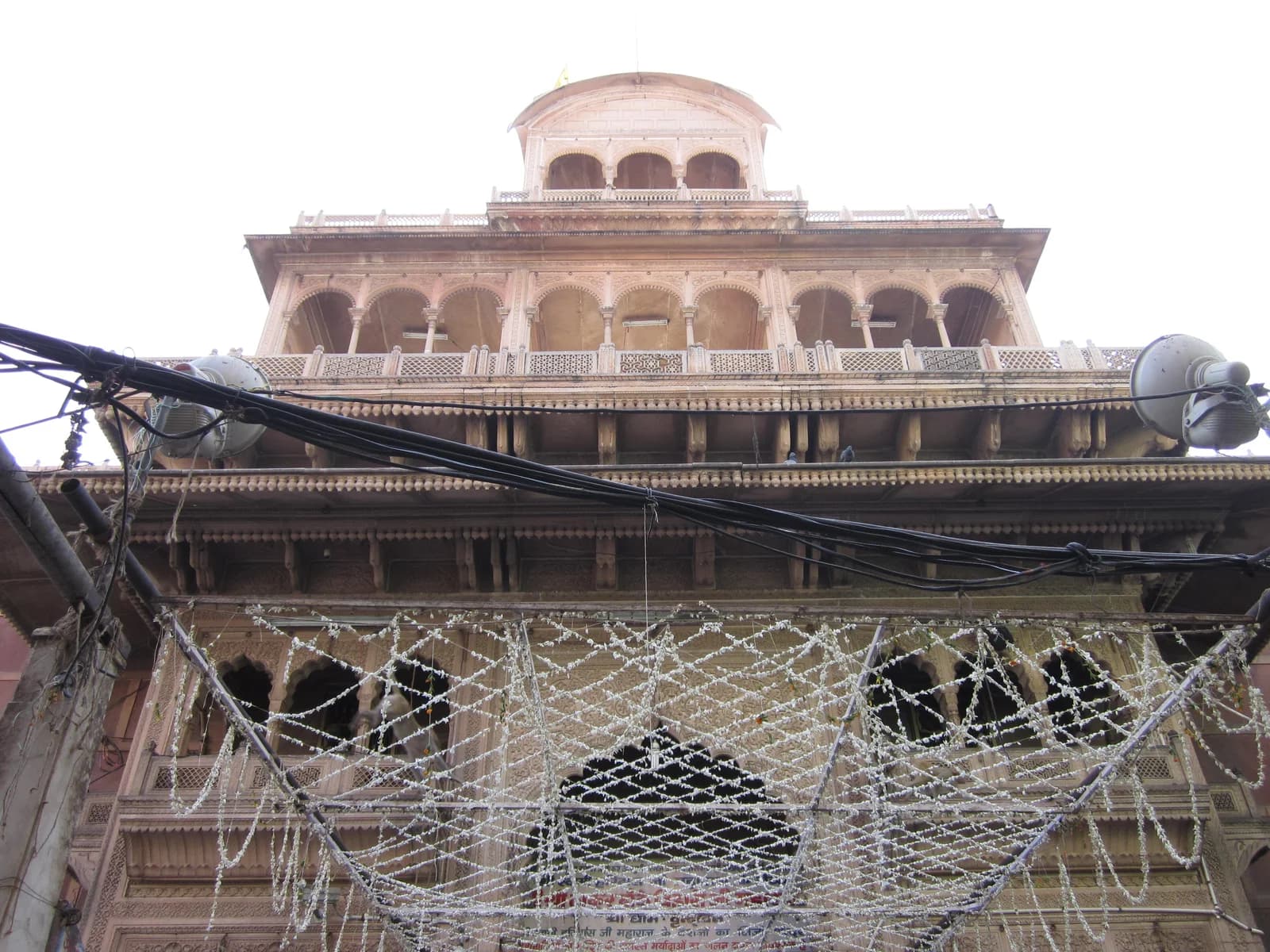
Radha Raman Temple in Old Vrindavan has a morning and an evening darshan rhythm, with an afternoon interval for the deity's seva and rest. Independent visitor guides commonly suggest morning darshan around 8:00 am–12:30 pm and evening darshan beginning around 5:30–6:00 pm, but these are indicative, not a currently verified temple timetable. As of 20 November 2026, consulted government and temple-lineage pages do not publish exact daily hours. For a morning visit, verify that day's darshan and Mangala Aarti arrangements locally before setting out. Pair Radha Raman with nearby Radha Damodar and Seva Kunj if open.
Radha Raman Temple timings: confirmed information versus estimates
Darshan follows daily worship, and curtains may close for bathing, dressing and offerings. A general visiting window does not guarantee continuous visibility or access to every ritual.
Morning darshanSeveral independent listings suggest approximately 8:00 am to 12:30 pm; the temple has not confirmed this window in the consulted pages.Confirm locally and leave room for a pause in darshan.AfternoonVisitor listings describe a substantial closure around midday for bhog and rest; exact boundaries are unverified.Do not rely on arriving in the middle of the afternoon.Evening darshanListings commonly suggest a reopening around 5:30–6:00 pm, with differing closing times.Check the current evening window instead of assuming a fixed closing hour.Mangala, Shringar and evening aartiThese belong to the worship tradition, but a current, authoritative public clock-time chart was not found.Ask temple staff for today's specific ritual and public attendance time.The Mathura district's Radha Raman Temple page establishes the shrine's heritage but does not provide daily hours. Temple-lineage information at Shri Radharaman explains the worship tradition without listing a definitive daily timetable. Third-party clock times are not official notices.
How morning seva and darshan fit together
Mangala Aarti: the early worship
Mangala Aarti is associated with awakening and greeting the deity at the start of the day. Online schedules disagree, including on seasonal changes. There is no verified Mangala Aarti clock time in the primary pages consulted. For this ceremony, confirm the time and public entry directly before travelling before dawn.
Shringar: preparation and adorned darshan
Following the early worship, Shri Radha Raman is served through bathing, dressing and ornamentation. Shringar refers both to this devotional service and to the beautifully adorned form seen by devotees. Seva may occur behind a curtain. Prefer a confirmed morning darshan window over an unverified Shringar Aarti time.
Bhog and the midday transition
Bhog is the offering of food to the deity. Rajbhog is associated with the principal midday meal, after which the daily rhythm moves towards rest. A closed curtain may mean a brief offering, not the end of public darshan. Ask the attendants whether darshan will resume shortly; if the longer afternoon break has begun, continue your circuit rather than waiting indefinitely.
What happens during evening seva and aarti?
Evening worship has its own character, not simply a repetition of the morning. The Shri Radharaman temple-lineage FAQ specifically describes Aulai Darshan as occurring in the early evening around Sandhya Aarti. The devotional idea is that Krishna has returned from herding cows, changes into comfortable clothes and is welcomed for his meal. This is a distinctive reason to consider an evening visit.
However, that explanation does not publish an exact Sandhya Aarti time. Online claims about Mangala, Sandhya or Shayan Aarti may be drawn from inconsistent calendars. Do not import Banke Bihari, ISKCON or Radha Damodar timings into a Radha Raman itinerary: each temple has its own worship schedule. Ask staff about the next public darshan or aarti.
Why Shri Radha Raman and Gopal Bhatta Goswami matter
Shri Radha Raman is a form of Lord Krishna whose name means the beloved of Radha. The shrine is one of Vrindavan's historic temples associated with the Gaudiya Vaishnava tradition. According to its temple tradition, the small, intricately formed deity manifested from a sacred Shaligram Shila in connection with Shri Gopal Bhatta Goswami, an associate of Chaitanya Mahaprabhu. The Mathura district administration dates the temple's construction to approximately 1542.
The temple-lineage account says descendants of Gopal Bhatta Goswami continue the seva. Visitors may also notice that a separate standing image of Radharani does not accompany Shri Radha Raman in the usual way. Temple tradition understands Radha's presence as inseparable from him, and her holy name is worshipped beside him. This background gives context to the temple's daily seva.
How to reach Radha Raman Mandir in Old Vrindavan
Radha Raman Temple is in the old temple-quarter lanes near the Seva Kunj and Keshi Ghat side of Vrindavan. If coming from Mathura Junction or an outer Vrindavan arrival point, choose an authorised local road option to an accessible approach, then continue on foot as needed. E-rickshaw drop-offs vary with barricades; a map pin does not guarantee door-to-door vehicle access.
For the final approach, ask for 'Radha Raman Ghera' or 'Radha Raman Mandir' rather than relying only on a car route through narrow lanes. Lanes can be uneven or congested. There is no verified current parking fee, guaranteed nearby parking space or step-free access arrangement to promise here. Visitors with limited mobility should check the current drop-off point and temple entrance conditions before committing to a walking circuit.
A useful morning walking circuit: Radha Raman, Radha Damodar and Seva Kunj
Best choice for a morning devoted to Old Vrindavan: go to Radha Raman first during a locally confirmed public darshan period. This reduces the risk of missing darshan. Afterwards, walk towards Shri Radha Damodar Temple, another important Vaishnava shrine near Seva Kunj. Check its own darshan schedule separately rather than assuming both sanctums will be open together.
- Radha Raman Mandir: allow a flexible visit for darshan, the courtyard and any brief seva interruption. If aarti is your main goal, confirm its actual time first.
- Radha Damodar Temple: continue through the adjoining historic lanes. It adds context to Vrindavan's Goswami heritage.
- Seva Kunj: add a respectful stop if visitor access is open at that time. It is associated with Radha-Krishna's pastimes, but should not be treated as having the same access rules as the two temples.
If Radha Raman's doors are temporarily closed for a short seva, an attendant may be able to indicate when darshan resumes. If the longer midday break has started, switch to another accessible site, take a meal or rest, and return in a confirmed evening window. Actual walking and waiting can exceed map estimates.
Travellers staying in Old Vrindavan may find it easier to split the visit. ZenithSuites Vrindavan, near Banke Bihari Temple, is one possible base for walking to neighbourhood shrines and returning to rest between darshans. The property has no on-site parking, so drivers should arrange an appropriate off-site approach rather than expecting vehicle access to its entrance.
Which visiting plan suits your group?
For a short morning: prioritise Radha Raman over collecting several temple names. Allow approximately 45–60 minutes as a flexible estimate, not a queue guarantee. If the deity is behind a curtain, ask how long the interruption is expected to last.
For families with children or older travellers: consider one or two shrines instead of a full circuit. The lanes, footwear arrangements and standing may be more tiring than the distance suggests. Confirm mobility needs directly; neither assisted entry nor barrier-free access should be assumed.
For aarti-focused devotees: confirm the specific ceremony before organising transport or an early wake-up. A general morning opening estimate does not verify Mangala Aarti, and an evening opening estimate does not verify Sandhya Aarti.
For festivals and Kartik: expect that seva, crowd handling and public viewing arrangements may differ from an ordinary day. Follow staff instructions and allow extra time.
Frequently asked questions
What is Radha Raman Mandir's morning darshan time?
Independent visitor listings often give roughly 8:00 am–12:30 pm, but this is not a verified current temple-issued timetable. Confirm the day's public darshan window locally, especially if you are arriving close to midday.
What time is Mangala Aarti at Radha Raman Temple?
Mangala Aarti is an early-morning seva, but the consulted temple and government pages do not establish a current exact time. Published third-party times conflict. Ask the temple for the specific date's ceremony and entry arrangements.
Can I visit Radha Raman, Radha Damodar and Seva Kunj together?
Yes, they form a sensible Old Vrindavan walking circuit if their individual visitor windows align. Put Radha Raman first if its darshan is your main purpose, and be prepared to shorten the circuit when a gate is closed or walking becomes difficult.
For dependable darshan, the most useful information is not a universal clock chart but today's actual public viewing window at Shri Radha Raman Temple. Treat online hours as guidance, verify individual aartis directly, and let the daily seva determine whether your visit works best in the morning or evening.
ZenithSuites
The ZenithSuites Vrindavan Editorial Team creates practical, respectful guides for temple visits, family pilgrimage and stays in the sacred lanes of old Vrindavan. Current temple and civic guidance should always be checked close to travel.
Plan Your Vrindavan Stay Near Shri Banke Bihari Temple
Compare Standard, Deluxe, Suite and Family Suite rooms approximately 120 metres in direct proximity from Shri Banke Bihari Temple, with transparent arrival and parking guidance.
Compare Vrindavan Rooms