
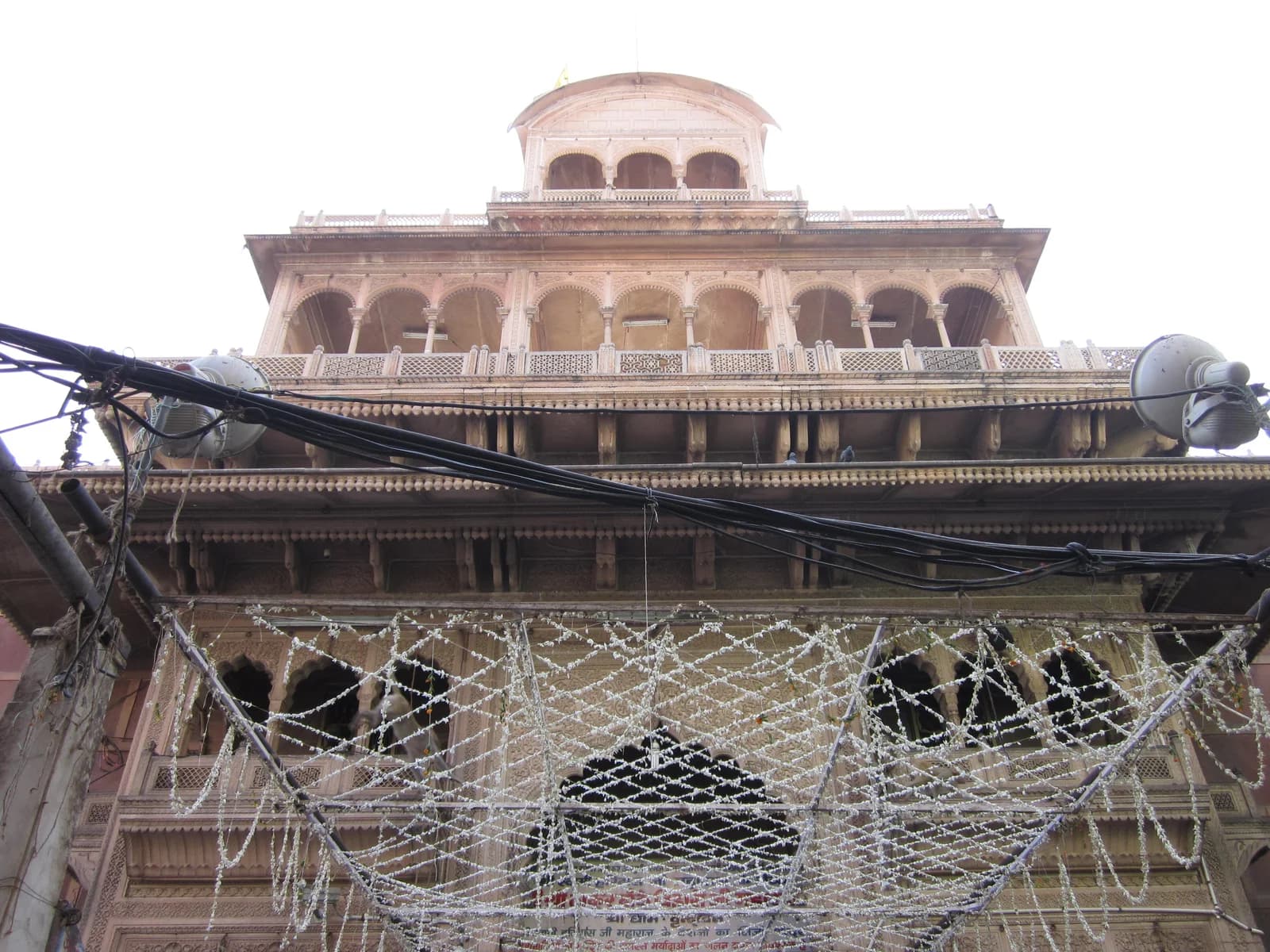
Choose March for Braj Holi, August for Jhulan and Krishna Janmashtami, September for Radhashtami, or October–November for lamps, parikrama and Kartik devotion. For 2027, Shri Banke Bihari Temple lists its Holi celebrations beginning on 18 March, Holika Dahan on 21 March and Dhulendi on 22 March. A 2027 panchang places Hariyali Teej on 4 August, Janmashtami on 25 August, Radhashtami on 8 September, Sharad Purnima on 14 October and Govardhan Puja on 30 October. These later dates are planning references, not yet confirmed temple event schedules. If you want intense colour and public celebration, choose Holi in Vrindavan or Barsana; for a more contemplative pilgrimage around Banke Bihari, Radha Raman and the Yamuna ghats, consider Kartik, with fewer main-day events and more flexibility outside peak dates.
Vrindavan festival calendar 2027: month by month
The table separates dated observances from approximate seasonal windows. Dates sourced from the Shri Banke Bihari Temple festival calendar are explicitly identified. Other listed festival dates follow the 2027 Drik Panchang calendar for the Delhi region and should be reconfirmed against Mathura–Vrindavan temple announcements before travel.
JanuaryWinter darshan; no featured festival date in this guideGood for general temple visits, but plan for cool mornings and possible travel fog.FebruaryBasant Panchami: 11 February (panchang)Choose early spring devotion rather than the peak Holi crowds.MarchBanke Bihari Holi: 18–22 March (temple calendar)Best for colour and Braj festivities; expect the most difficult pedestrian movement.AprilSpring temple visits and seasonal floral traditionsChoose flexibility, but expect increasingly warm afternoons.MayHot-season darshanKeep outdoor plans short; not the easiest month for elderly pilgrims.JuneSummer darshan, ahead of monsoonAllow rest periods and avoid ambitious midday walking circuits.JulyGuru Purnima: 18 July (panchang)Suitable for a guru-centred visit; conditions can be hot, humid or wet.AugustHariyali Teej/Jhulan: 4 August; Janmashtami: 25 August (panchang)Choose swings and monsoon devotion, or Krishna's birth celebrations.SeptemberRadhashtami: 8 September (panchang)Especially meaningful for Radha devotion and a possible Barsana visit.OctoberSharad Purnima: 14 October; Diwali: 29 October; Govardhan Puja: 30 October (panchang)Choose moonlit devotion, lamps or Annakut, with separate travel plans for Govardhan.NovemberKartik devotion continues; Devutthana Ekadashi: 10 November; Kartik Purnima: 14 November (panchang)Choose lamps, bhajan and considered morning walks, avoiding crowded climax days.DecemberWinter temple visits; Bihar Panchami programme not yet confirmedCheck the temple calendar before booking an appearance-day pilgrimage.What does 'panchang' mean here? It identifies the expected religious observance date, not a guaranteed procession, entry route, special darshan session or public-event timetable. An individual temple can follow its own ritual convention. Check the Uttar Pradesh Braj Teerth Vikas Parishad and temple notices for local arrangements.
March: Holi is the most energetic—and least predictable—visit
For visitors searching for Vrindavan Holi 2027 dates, the strongest date evidence is the temple's own listing: Aamla or Rangbharni Ekadashi on 18 March, Holika Dahan on 21 March, and Dhulendi on 22 March. The broader Braj season includes gatherings in Barsana, Nandgaon, Mathura and other locations; do not assume every village event shares Banke Bihari's schedule. Exact 2027 flower-Holi sessions and local programmes need separate confirmation.
Stay in Vrindavan for Banke Bihari and Old Vrindavan's festive streets; choose Barsana if Lathmar Holi is your priority, and allow a dedicated road journey rather than treating it as a short local detour. Coloured powder, pushing crowds, congestion and temporary diversions can turn a simple walk into a slow journey. Families with small children and those uncomfortable in packed gatherings may enjoy the lead-up on a less crowded date better than the main colour day. Follow crowd marshals and avoid carrying valuable equipment into tightly packed areas.
August: Jhulan and Hariyali Teej offer a different kind of celebration
Jhulan Yatra celebrates Radha and Krishna through decorated swings, music and Sawan devotion. 4 August 2027 is the panchang date for Hariyali Teej, traditionally an important swing-festival day at Banke Bihari. It does not verify a complete 2027 Jhulan schedule for every Vrindavan temple. Swing displays and their duration differ among shrines; ask the particular mandir before planning a visit solely around a special hindola.
Jhulan is a good choice for visitors seeking devotional decoration and a monsoon setting rather than powder colours. Explore Banke Bihari and, subject to opening periods, Radha Vallabh or Radha Raman on a separate walk. Rain can make stone surfaces slippery and narrow lanes slower, while humidity may be tiring. A compact itinerary is more sensible than trying to visit every temple between showers.
August: Janmashtami is for Krishna's birth celebrations
25 August 2027 is the panchang date for Krishna Janmashtami in Mathura. The central destinations are Shri Krishna Janmabhoomi in Mathura, where pilgrims focus on Krishna's birthplace, and Vrindavan temples such as Banke Bihari and the Krishna Balaram Mandir (ISKCON). Their rituals and visitor arrangements are not interchangeable. The Banke Bihari Temple festival information describes a special Mangla Aarti tradition on Janmashtami, but the 2027 attendance procedure and schedule must be checked with the temple.
Choose Janmashtami for a deep Krishna-centred occasion, especially if you value prayers and singing more than sightseeing volume. Decide whether the Mathura birthplace or Vrindavan darshan is your single main objective: attempting both at peak hours may leave much of the day in traffic or queues. Celebrations may extend late, so check the specific venue's current schedule and arrange your return transport in advance. Families and seniors should prefer one primary temple plus a backup, not a rushed multi-location plan.
September: Radhashtami belongs on a Radha-focused pilgrimage
8 September 2027 is the panchang date for Radhashtami. Vrindavan offers Radha-centred devotion at shrines including Radha Vallabh and Radha Raman, while Barsana's Shri Radha Rani Temple is especially significant for pilgrims marking Radha's appearance. Barsana is a separate road trip, with possible bottlenecks around the hilltop temple approaches; confirm current access arrangements rather than assuming easy vehicle drop-off.
Radhashtami is a strong choice if the purpose of the journey is worship rather than a varied tourist programme. Compared with Holi, there is less emphasis on playing with colours, but that does not make major darshan gatherings uncrowded. September can remain humid or rainy. If travelling with an elderly devotee, choose either Barsana or a manageable Vrindavan circuit, keeping recovery time between visits.
October: Sharad Purnima favours an evening of devotion
14 October 2027 is the panchang date for Sharad Purnima. The festival is associated with Krishna's rasa tradition and has a special place in Vrindavan's sacred geography. The temple calendar describes Sharad Purnima as the day of Maha Raas, but individual 2027 darshan arrangements are not yet confirmed. Consider Banke Bihari, nearby traditional shrines and the wider Kesi Ghat area; do not assume a particular performance, aarti or river activity is scheduled.
October–November: Kartik, Diwali and Govardhan Puja
For a longer devotional stay, Kartik is often the best festival season to choose. In the northern purnimanta calendar, the broad 2027 Kartik period is approximately 16 October to 14 November; some Vaishnava observance windows and day conventions differ. Pilgrims associate this period with Damodar prayers, lamps, bhajan and parikrama. ISKCON Vrindavan is a natural choice for Krishna-centred evening devotion, while the lanes around Banke Bihari, Radha Raman and Kesi Ghat offer a different traditional atmosphere. Offer lamps only where permitted and follow riverfront safety instructions.
The panchang lists Diwali on 29 October, Govardhan Puja on 30 October, Devutthana Ekadashi on 10 November and Kartik Purnima on 14 November 2027. Some calendars distinguish the Kartik Purnima fasting or evening observance on 13 November from the full-moon day on 14 November, so confirm the event you intend to attend. Do not equate all those dates with the same crowd pattern.
For Govardhan Puja, visit the Govardhan area for its association with Krishna lifting Govardhan Hill, rather than expecting to experience the whole festival from a Vrindavan hotel. Annakut offerings may occur at temples across Braj, but specific public access is temple-dependent. The full Govardhan parikrama is a demanding walk and not a casual addition to a one-day city itinerary. Those with limited mobility can plan a shorter, locally appropriate visit after checking what roads and temple approaches permit.
Which festival should you actually choose?
- First-time visitors who want vivid celebration: March Holi, provided crowds and coloured powder are welcome rather than stressful.
- Photography and floral decoration enthusiasts: August Jhulan, while treating a specific display as unconfirmed until the host temple announces it.
- Krishna-focused pilgrims: August Janmashtami, with either Mathura Janmabhoomi or one major Vrindavan temple as the priority.
- Radha devotees: September Radhashtami, with a deliberate choice between Barsana and Vrindavan.
- Slow spiritual travel, couples and repeat visitors: October–November Kartik, ideally avoiding the busiest single festival dates.
- Seniors or families who dislike packed queues: an ordinary weekday in January, February, April or another non-festival period may be more comfortable than any headline event, depending on weather.
Where to stay and how to handle festival transport
For Old Vrindavan darshan, a base near Banke Bihari saves repeated long crossings of town. ZenithSuites Vrindavan, in the Old Vrindavan temple quarter, is one option for visitors who want to walk to nearby shrines and return to their room between visits. Proximity is not the same as a guaranteed walking distance: crowd barriers, entry gates and police diversions can change the route. The property has no on-site parking; paid off-site arrangements are described on its website, but availability and vehicle approach must be reconfirmed.
Arriving via Mathura Junction, discuss the practical drop-off point with your driver before entering Vrindavan. During Holi, Janmashtami and major Kartik dates, private cars may not reach the temple-lane entrance, and an e-rickshaw or final walk may be necessary. Do not assume that a parking location, e-rickshaw fare, one-way route or security checkpoint will remain unchanged in 2027. Prem Mandir and ISKCON lie away from the tight Banke Bihari lanes, so treat them as a separate road-transport leg when your time or mobility is limited.
Weather affects which month feels manageable: February–March is generally milder before summer warmth builds; May–June can be very hot; July–September brings humidity and possible rain; October–November is often more comfortable for walking, although evening temperatures and crowds still vary. Carry water, wear secure footwear and leave time between darshan sessions. Check the temple's darshan guidance for opening periods, which vary by season and may change for festivals; no generic timetable should be treated as a guaranteed 2027 festival schedule.
Two practical ways to structure a short trip
One-night Old Vrindavan stay: Explore one or two nearby shrines on arrival. Prioritise Banke Bihari or Radha Raman the next morning, allowing a rest break and departure buffer. This suits quieter Kartik weekdays better than peak Holi.
Two-night Braj stay: Reserve one day for Old Vrindavan and another for Mathura on Janmashtami, Barsana around Radhashtami or Govardhan during Kartik. Keep the third morning flexible for delayed darshan or an early departure.
Questions visitors ask about Vrindavan festivals in 2027
Are all the festival dates final?
No. The published Banke Bihari calendar explicitly lists its March 2027 Holi dates. Later dates here are panchang-based expectations; temple programmes, special rituals, entry rules and local transport advisories need fresh confirmation. The official temple visitor page is a useful starting point.
Is Kartik quieter than Holi?
Usually the experience is less centred on mass colour play, but Kartik Purnima, Ekadashi, weekends and major puja dates can still be extremely busy. Choose an ordinary weekday within Kartik for greater flexibility.
Can I cover Barsana, Govardhan and Vrindavan in one festival day?
It is not a sensible default at peak times. These are separate destinations, and a road transfer can be affected by restrictions or congestion. Choose one main out-of-town focus and allow room for changed plans.
Bottom line: Holi is for colour, Jhulan for the swings, Janmashtami for Krishna's birth, Radhashtami for Radha devotion, Sharad Purnima for a reflective evening and Kartik for lamps and repeated darshan. Pick the religious experience first, then confirm the particular 2027 temple event and access notices before finalising travel.
ZenithSuites
The ZenithSuites Vrindavan Editorial Team creates practical, respectful guides for temple visits, family pilgrimage and stays in the sacred lanes of old Vrindavan. Current temple and civic guidance should always be checked close to travel.
Plan Your Vrindavan Stay Near Shri Banke Bihari Temple
Compare Standard, Deluxe, Suite and Family Suite rooms approximately 120 metres in direct proximity from Shri Banke Bihari Temple, with transparent arrival and parking guidance.
Compare Vrindavan Rooms