
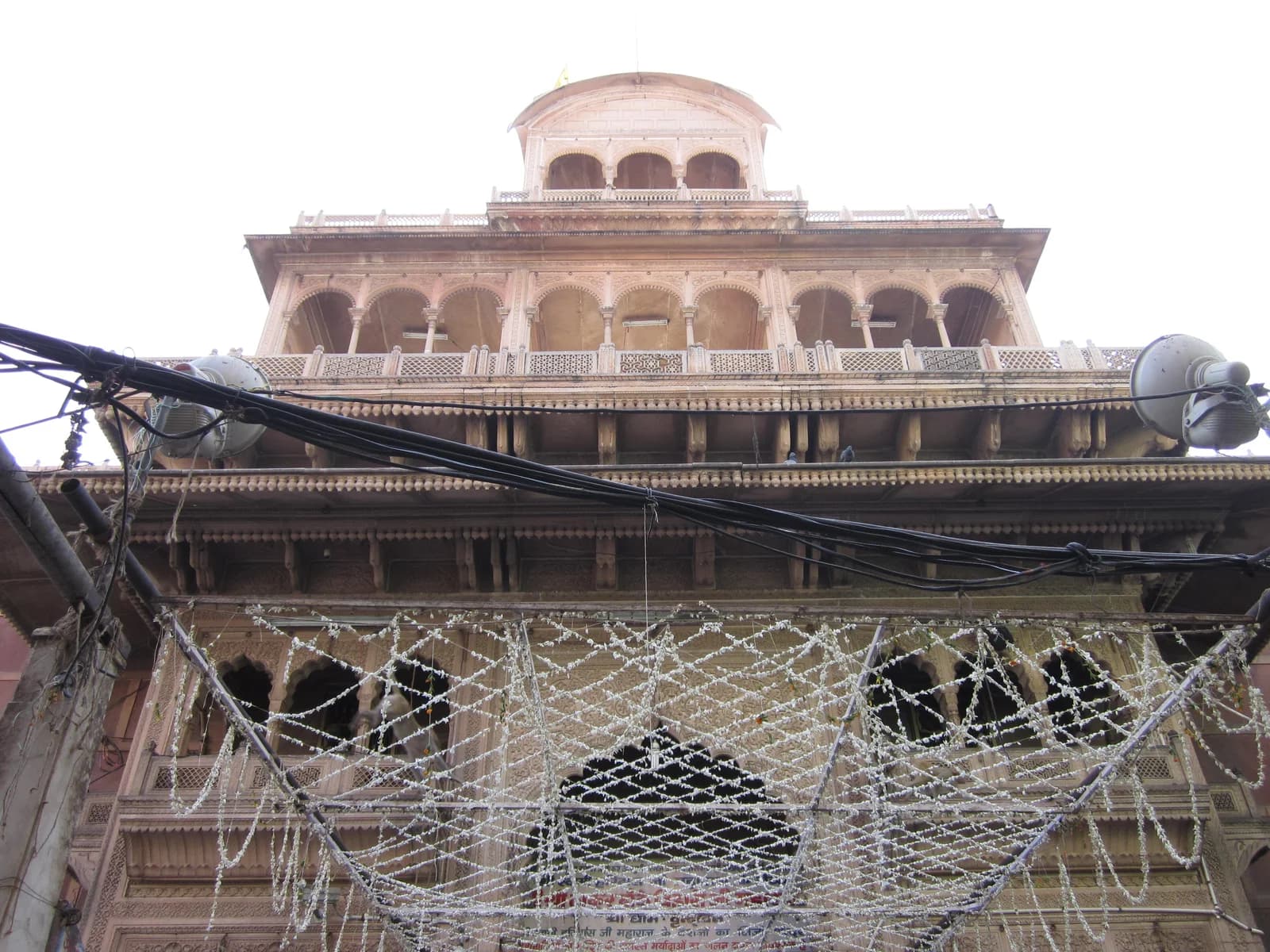
The Vrindavan parikrama route is a circular pilgrimage walk around Vrindavan town, commonly described as about 10–11 km, not the much longer 84-kos Braj pilgrimage. You can join it near Keshi Ghat on the Yamuna or around Raman Reti near the ISKCON Krishna-Balaram Mandir, walk clockwise with the sacred town on your right, and return to where you began. On the way, useful landmarks include Kaliya Ghat, Madan Mohan Temple, Keshi Ghat, Bansivat, Pani Ghat and Atalla Chungi. Allow roughly 3–4.5 hours for a comfortable full walk with modest pauses; crowds or extended darshan can add considerably more. If you have limited mobility or only an hour, choose a short riverside-and-temple walk instead of attempting the entire circuit.
Vrindavan parikrama distance and time: what to expect
For route planning, use approximately 10–11 km for the full Vrindavan Panchkosi, or Panchkroshi, parikrama. Some route guides quote around 10 km and others around 10.5 km. This is not a single universally fixed GPS measurement: where you join, which marked lane you follow, riverbank conditions and diversions can change the distance you actually cover. Walking from your hotel adds extra distance.
Full circuit at a steady paceAbout 2.5–3.5 hours of walking, excluding longer stopsFit walkers familiar with sustained walkingFull circuit with water, photo and prayer breaksRoughly 3–4.5 hours; longer on busy daysMost first-time pilgrimsFull circuit at a gentle paceAllow 4–6 hours or reassess before startingPeople who need frequent breaksPartial Old Vrindavan visitAbout 45–90 minutes, depending on turnaroundFamilies, seniors and short itinerariesThese are planning allowances, not official parikrama timings or guaranteed journey times. Temple queues and crowds add time.
Where should you start Vrindavan parikrama?
Keshi Ghat is a practical starting point for people staying in Old Vrindavan, especially near Banke Bihari Temple. The Raman Reti–ISKCON area is convenient for people arriving from the wider town or staying around Krishna-Balaram Mandir. There is no compulsory start gate. Note your joining point and complete the loop there.
Do not assume your car or e-rickshaw can drop you on the river steps or directly outside a temple. Confirm the permitted drop-off and allow for extra walking. For navigation, use a third-party Vrindavan parikrama map and checkpoint guide as an overview, not as confirmation of live road access. Check the locally signposted Parikrama Marg and ask a nearby shopkeeper or pilgrim when a junction is unclear.
Full Vrindavan parikrama route: landmarks in walking order
This clockwise landmark sequence begins near Krishna-Balaram Mandir at Raman Reti. Not every shrine lies directly on the path. If starting at Keshi Ghat, enter the same circuit there and continue around until you return to Keshi Ghat.
- Raman Reti and Krishna-Balaram Mandir (ISKCON): Identify the outer Parikrama Marg rather than simply following the road to whichever temple appears nearest. Entering ISKCON is optional.
- Varaha Ghat and Kaliya Ghat (Kalideh): Follow the route towards the Yamuna-side sacred sites. Look for Kalideh signs; the riverside is not necessarily a continuous, safe path.
- Shri Radha Madan Mohan Temple: The distinctive historic temple rises above the surrounding area and is one of the clearest Old Vrindavan landmarks. The uphill temple approach may involve steps; entering is optional.
- Keshi Ghat, with Imli Tala and Shringar Vat nearby: Use Keshi Ghat to orient yourself; Imli Tala and Shringar Vat may require detours. Avoid crowding wet or damaged ghat steps.
- Bansivat, Jagannath Temple and the southern river-side sector: Continue on the recognised circuit towards Bansivat and the Jagannath Temple area. Tatiya Sthan and Pani Ghat are further landmarks. Avoid unmarked riverbank shortcuts.
- Pani Ghat to Atalla Chungi: The circuit eventually turns back through more urban stretches. Atalla Chungi is an important road junction: expect more traffic interaction, identify the safe crossing, and follow current pedestrian directions rather than a phone's shortest-car-route suggestion.
- Return towards Raman Reti: Return to your exact joining point.
The route is often described as clockwise, keeping Vrindavan on your right. However, temporary barriers and crowd-control arrangements take priority over a simplified online diagram. If you lose the route, ask specifically for Vrindavan Panchkosi Parikrama Marg; simply asking for Banke Bihari or Prem Mandir may lead you away from the loop. Those temples need not be entered to complete the circuit.
A shorter parikrama-inspired walk for seniors and families
For a visitor who cannot manage 10 km, a meaningful alternative is Keshi Ghat and the nearby Old Vrindavan shrine lanes. Begin at an accessible approach to Keshi Ghat, spend time looking over the Yamuna, then walk towards the Madan Mohan area or towards Imli Tala, choosing one direction rather than trying to include everything. Turn back after 20–30 minutes of manageable walking and return to your meeting point. With rest stops, this can be a 45–90-minute outing.
This is a partial devotional walk, not a completed Panchkosi parikrama. Stop if anyone becomes tired or overheated. Families can visit Banke Bihari and a ghat separately. If steep approaches are difficult, skip the climb towards Madan Mohan; viewing the ghat and nearby lanes still offers a worthwhile visit.
For visitors based near Banke Bihari Temple, staying in Old Vrindavan can make a rest between outings easier. ZenithSuites Vrindavan is located in the old temple area, making a return to the room between darshan plans practical, although actual walking routes depend on barriers and crowds. Prem Mandir and ISKCON may need separate transport.
Footwear: should you walk barefoot?
Walking barefoot is a respected devotional practice, and many parikrama pilgrims choose it. It should not be confused with a verified, universal rule that every person must remove their footwear for the entire outdoor circuit. Choose a safe option for your feet based on heat, surface conditions and personal practice. Comfortable walking sandals or shoes can help prevent injury on rough, dirty or hot stretches; remove them wherever an individual temple requires it.
If you intend to go barefoot, consider the temperature of stone and tarmac as well as your ability to walk for several hours. Early morning reduces heat, not surface hazards. Carry a small bag for shoes when entering shrines. Socks may not protect against hot or sharp surfaces. If you have reduced foot sensation, balance difficulty or a recent injury, protect your feet and prioritise medical advice over a barefoot plan.
Best time to start, and why crowds change the plan
A cool, daylight early-morning start is generally the most manageable option, especially for a full walk. No verified official opening hour applies to the entire outdoor route. In summer, avoid exposed stretches in the midday heat and carry drinking water. During monsoon periods, slippery steps, pooled water and changes along the Yamuna can make some approaches unsuitable. Winter mornings can be cold or foggy, so consider visibility at road crossings.
Ekadashi, Purnima, weekends and major festivals can bring intense pilgrimage crowds. The official Banke Bihari Temple visitor information warns of busy auspicious days and festivals, while its darshan guidance explains that temple hours vary seasonally. These are temple notices, not route timings. With a child, older relative or someone who struggles in crowds, a quieter day or the short route is often more comfortable than an ambitious festival-day circuit.
Current access cannot be assumed from a static map. In 2026, local reporting described planned improvements to pedestrian and vehicle separation on the parikrama route, including attention to the Atalla Chungi area. These projects do not confirm current access. Check with local traffic police, your accommodation or people at the actual junction before relying on a shortcut, crossing or vehicle pickup point. Accessibility across the full loop, including uninterrupted wheelchair passage, has not been verified.
Getting to the route and returning afterwards
From Mathura Junction, arrange road transport towards Raman Reti or the nearest permitted Old Vrindavan drop-off. The Banke Bihari Temple's official visitor guidance specifically notes that private cars cannot be taken all the way to the temple, so avoid planning a door-to-door car pickup there. Parking availability, fees and e-rickshaw prices vary and are not confirmed here.
For a complete circuit, the simplest return arrangement is often to start and finish near the same transport pickup area. For a partial walk, settle on an obvious meeting landmark before separating from your driver, carry the driver's phone number and expect the actual pickup to move if local traffic restrictions are introduced. Allow energy for the final walk to your pickup point.
Vrindavan parikrama versus 84-kos Braj parikrama
These are different pilgrimages. Vrindavan Panchkosi parikrama circles the town and is generally planned as an approximately 10–11 km outing. Chaurasi Kos Braj parikrama covers a much wider sacred region associated with numerous towns, forests and pilgrimage sites and is normally organised over multiple days. The Govardhan parikrama is another separate circuit. When asking for directions or a map, use the specific name Vrindavan Panchkosi Parikrama to avoid being sent towards Govardhan or a multi-day Braj itinerary.
Quick questions before you set out
Can I start Vrindavan parikrama from Banke Bihari Temple?
You can begin your pilgrimage day with Banke Bihari darshan, then walk to a suitable joining point on the actual parikrama route, such as near Keshi Ghat. Banke Bihari Temple is not a substitute for identifying the circular outer path, and its queue time is additional to the parikrama walk.
Does a partial walk count as a full parikrama?
No. A short visit to Keshi Ghat and nearby shrines is a valid personal devotional outing, but it should not be presented as completion of the full town circuit. Ask your spiritual guide about observance.
Is the entire route wheelchair-accessible or vehicle-accessible?
Uninterrupted accessibility has not been verified. Surfaces, crowd barriers, river approaches, temple steps and traffic restrictions can vary by section and date. Consider a shorter accessible segment chosen locally, and never assume a vehicle can follow pilgrims around the entire route.
The most reliable approach is simple: choose Keshi Ghat or Raman Reti as your identifiable start, follow the recognised clockwise Parikrama Marg, watch the road crossings and return to the same spot. Give the day more time than the map's walking estimate, and make the shorter Old Vrindavan option your first choice whenever comfort and safety matter more than completing a circuit.
ZenithSuites
The ZenithSuites Vrindavan Editorial Team creates practical, respectful guides for temple visits, family pilgrimage and stays in the sacred lanes of old Vrindavan. Current temple and civic guidance should always be checked close to travel.
Plan Your Vrindavan Stay Near Shri Banke Bihari Temple
Compare Standard, Deluxe, Suite and Family Suite rooms approximately 120 metres in direct proximity from Shri Banke Bihari Temple, with transparent arrival and parking guidance.
Compare Vrindavan Rooms